Impact of Social Features on Player Retention
Impact of Social Features on Player Retention
IGaming Marketing
May 13, 2026
May 13, 2026
Friend systems, leaderboards and clans increase session time, reduce churn, and raise LTV for iGaming platforms.
Friend systems, leaderboards and clans increase session time, reduce churn, and raise LTV for iGaming platforms.
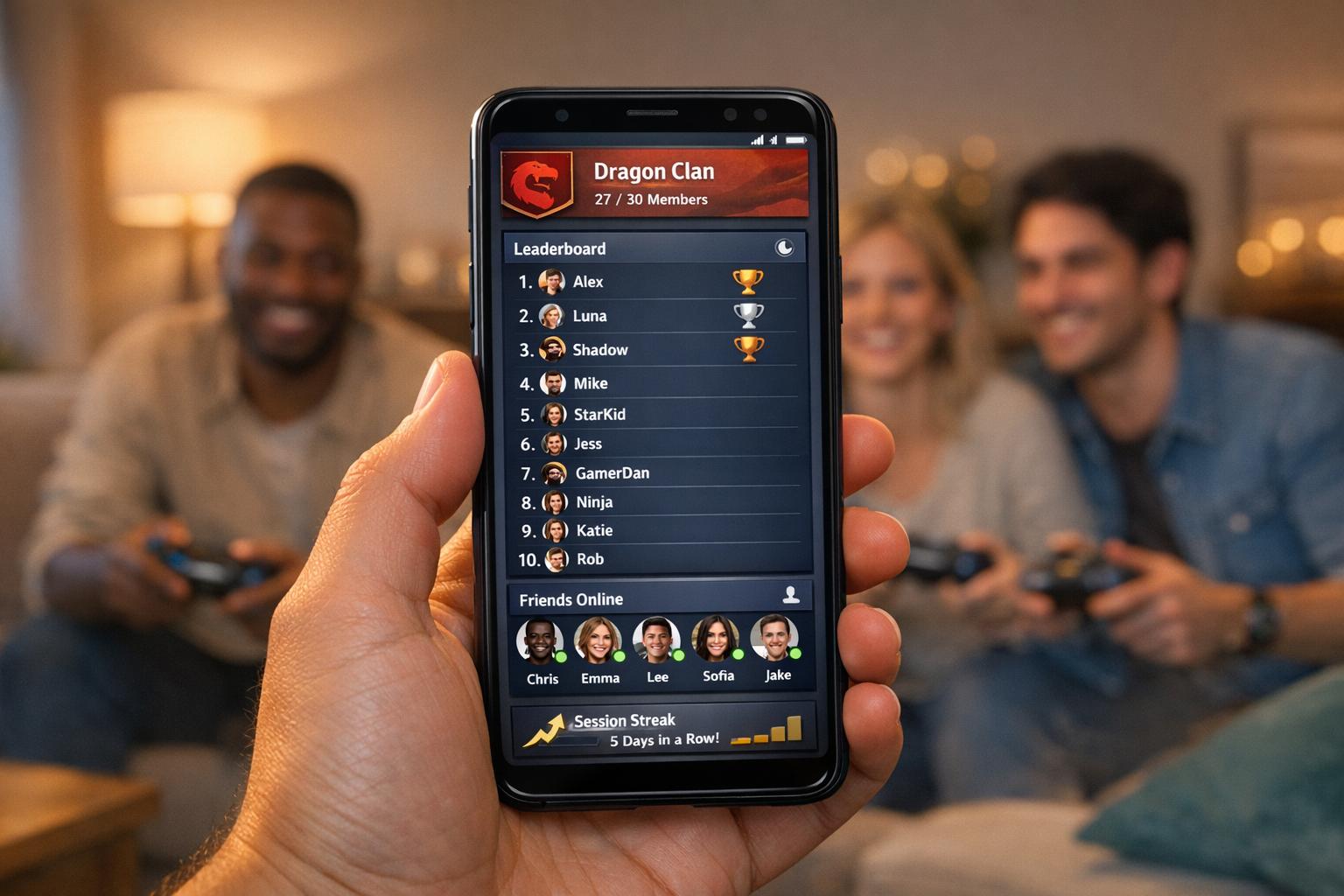
Social features in gaming are transforming how platforms retain players. By integrating tools like friend systems, leaderboards, and guilds, operators create a sense of community that drives long-term engagement. Here’s what you need to know:
Retention Boost: Platforms with social features retain 75% of players for six months, compared to 50% without them.
Higher Lifetime Value (LTV): Players active in forums or social networks show a 15% increase in LTV.
Session Metrics: Social-enabled platforms see 8.3x longer session times and nearly 10x more page views per visit.
Emotional Connection: Group systems like clans and shared goals make players feel invested, reducing churn.
Social features shift gaming from a transactional experience to a community-driven one. The result? Higher retention, engagement, and revenue. For operators, this means prioritizing social tools is no longer optional - it’s a key growth strategy.

Social Features vs. No Social Features: Key Player Retention Metrics
How Social Features Support Long-Term Retention
Retention Metrics Tied to Social Interactions
Social features have a powerful impact on engagement metrics. Platforms that integrate social tools report significantly better performance compared to industry averages. For instance, these platforms boast average session times of 10 minutes and 26 seconds, which is 8.3 times longer than the industry norm of 1 minute and 15 seconds. Similarly, users on social-enabled platforms view 28.94 pages per visit, a dramatic increase from the standard 2.97 pages. Even bounce rates see a sharp decline, dropping to 21.25% compared to the typical 44–58% range.
Metric | Industry Average | Social-Enabled Platform |
|---|---|---|
Session Time | 1 min 15 sec | 10 min 26 sec (8.3x longer) |
Pages Per Visit | 2.97 | 28.94 (9.7x more) |
Bounce Rate | 44–58% | 21.25% (2–3x lower) |
Retention (Competitive Players) | Baseline | +40% higher |
These aren't minor differences - they reflect a major shift in user behavior when social tools are introduced. For example, leading gamified platforms achieve Day-30 retention rates of 30–40%, nearly double the industry average of 15–25%. These metrics highlight how social systems not only improve numbers but also create an environment where users feel more connected and engaged.
Clans, Guilds, and Player Loyalty
Group systems like clans, guilds, and leagues do more than offer perks - they foster a sense of belonging. When players collaborate toward shared objectives, leaving the platform can feel like letting their team down, which strengthens their commitment.
"Players who feel that they are part of a community often continue playing even during the worst of times." - Nikita Golodaev, Opinion Piece, Casino Guru
Tiered systems, such as leagues that range from Bronze to Diamond with seasonal resets, amplify this effect. These structures give players recurring goals and a sense of status within their community. As a result, the platform transforms from a place to chase rewards into a social hub where relationships and shared experiences take center stage.
Long-Term vs. Short-Term Retention Outcomes
Social features excel at fostering long-term connections. While bonuses can drive initial engagement, their impact is fleeting. In contrast, social tools grow in value over time. The longer a player stays, the more relationships and achievements they accumulate, making it harder to leave.
A great example of this comes from Funstage in 2026. By integrating their loyalty and CRM systems into a unified platform with real-time, mission-based gamification, they achieved a staggering 199.4% increase in customer Lifetime Value (LTV). The secret? Rewarding social milestones in real time, reinforcing positive behavior while players were still engaged. This approach highlights how building a social ecosystem can keep users invested for the long haul.
Social ecosystems also create switching costs - the friendships, achievements, streaks, and status that players risk losing if they move to a competitor. The more time and effort someone invests in a platform, the less appealing it becomes to start over elsewhere. This dynamic underscores the importance of social features in building lasting loyalty.
Mastering App Stickiness: How Gamified Profiles Drive User Retention
How Social Features Change Player Behavior
Social features in games don't just improve retention - they actively shape how players engage with the game.
Session Frequency and Playtime Increases
Adding social elements to a game can significantly change how often and how long players play. Features like leaderboards, daily challenges, and social circles encourage players to stick around, with play sessions increasing by 40% and retention rates climbing by 40–50%. For instance, real-time leaderboards tap into players' competitive instincts, prompting them to return frequently to track their rankings. Friend challenges and shared achievements also spur activity, increasing weekly active users by 25%.
Social betting features take this a step further by turning individual decisions into shared experiences. Players can copy or share picks, creating a viral effect that keeps the community engaged.
"Players who connect with other players stay longer, bet more, and come back. Community drives lifetime value." - Trivelta
Collaborative Play and Player Satisfaction
Team-based play introduces a new layer of emotional engagement. When players collaborate to achieve shared goals, their focus shifts from just earning rewards to building relationships and gaining social recognition. This shift isn't just about fun - it has real business implications. Players involved in active communities or forums show a 15% higher lifetime value (LTV).
For lower-skill players, social connections can be especially impactful. Team environments help them improve their performance and stay engaged longer. These collaborative dynamics make players feel more invested, fostering deeper and more sustained engagement with the game.
Managing Negative Behavior in Social Systems
Of course, social features can also bring challenges, like toxicity and harassment, which can harm the community. The solution isn't to avoid social systems but to manage them wisely. For example, Betgames partnered with social.plus to roll out AI moderation tools alongside live chat features. They started small, testing the tools on a single casino game before expanding to 40–50 RNG and live casino titles. This phased approach allowed them to refine the system while maintaining player safety.
Moderation isn't just about compliance - it's a retention tool. AI can handle large-scale filtering, but human community managers are essential for creating a welcoming atmosphere. Platforms that combine AI and human moderation typically build stronger, healthier communities with lower player churn.
These shifts demonstrate the potential of social features to become powerful tools for iGaming operators, shaping both player behavior and long-term engagement.
What iGaming Operators Can Do With This Data
The research makes one thing clear: social features are more than just extras - they’re a real driver of growth. But having data isn’t enough; it’s about turning that data into actionable steps. Here’s a closer look at how operators can design, justify, and fine-tune social systems.
How to Build Effective Social Systems
The best social systems revolve around progression and purpose. For instance, Achievement Missions with daily, weekly, and monthly goals give players a sense of direction and keep them engaged over time. Add tools like "Player Journey Maps", which highlight milestones and achievements, and you’ve created a personal story that players can share - boosting their emotional connection to the game.
At the same time, simpler is often better. Offering too many social tools at once can overwhelm players, leading to frustration and drop-offs. Instead, start with one or two impactful features, like leaderboards or friend challenges. This controlled rollout allows operators to gather feedback and refine features before scaling up. It’s worth noting that 80% of players express interest in community features.
Another critical factor? Mobile optimization. Social interfaces like chat or leaderboards need to work seamlessly on smaller screens. If they don’t, players may disengage entirely.
When done right, these design choices don’t just enhance player engagement - they pave the way for measurable returns.
The ROI of Social Feature Investment
Well-implemented social systems don’t just improve user experience - they deliver tangible financial benefits. For example, social betting has been shown to increase lifetime value (LTV) by 20%–40%, thanks to players spending more time in sessions and returning more often. Additionally, players who participate in forums or community groups see a 15% higher LTV compared to those who play alone.
"Social betting is the most effective strategy to move users from transactional bettors to community members, increasing LTV by an estimated 20-40% through higher session frequency and duration." - Developers.dev
Beyond boosting LTV, active communities can lower acquisition costs. Features like shared bet slips and social achievements often lead to organic referrals, reducing reliance on paid marketing channels. As one expert put it:
"The most valuable currency isn't a bonus code, but a loyal community." - Time2Play
Common Challenges and How to Solve Them
Despite the clear advantages, implementing social features isn’t without its hurdles. Integrating third-party tools into existing platforms can be a technical headache. Platforms with built-in social features, managed directly through a back office, are generally easier to maintain and adjust.
For operators lacking in-house expertise, using pre-built SDKs like SendBird or Firebase - or hiring specialized staff - can speed up the development process by as much as 35%. Delays in launching these features can lead to player churn, so minimizing time-to-market is key.
Moderation is another challenge, but there are proven solutions. Take the 2025 partnership between Betgames and social.plus as an example. They started small - testing AI-powered moderation on a single game - and gradually expanded to 40–50 titles. While AI handled the heavy lifting, it was human community managers who set the tone and ensured players felt secure and valued.
Using Enreach to Improve Player Engagement
Targeted outreach on platforms like Telegram plays a vital role in attracting and retaining players. Enreach takes this strategy to the next level by combining personalized AI communication with efficient outreach tools, helping iGaming operators engage players more effectively.
What Enreach Offers iGaming Teams
Enreach is tailored for iGaming operators using Telegram to boost player sign-ups and initial deposits. Its platform integrates AI Agents with automated outreach tools, enabling large-scale, personalized interactions with ease.
Here’s how it works:
AI Agents analyze player behavior to craft personalized messages.
Telegram bots deliver real-time updates, promotions, and customer support, ensuring players stay informed and engaged.
Operators can create interactive Telegram groups for Q&A sessions, live streams, or AMA events, building stronger community connections and enhancing brand credibility.
One standout feature of Enreach is its managed service layer. A dedicated team of sales, data, and outbound specialists manages campaigns for clients, allowing operators to focus on their primary business without needing in-house expertise.
These tools collectively drive stronger player engagement and retention.
Results iGaming Operators Have Seen with Enreach
Combining AI-driven personalization with direct Telegram outreach helps solve two major challenges in player retention: reaching players on their preferred platform and making communication feel relevant.
Enreach’s AI-powered predictive tools can spot early signs of player churn and trigger personalized re-engagement efforts before inactivity sets in. This proactive approach, delivered through Telegram - a platform players frequently check - creates impactful touchpoints that traditional emails or banner ads often miss.
How to Get Started with Enreach
Enreach offers straightforward pricing:
Outreach Tool: $250/month
AI Agent (5,000 messages): $400/month
Bundle (both tools): $650/month
Additionally, operators can purchase pre-qualified Telegram accounts with three months of Telegram Premium as a one-time expense. Each account sends 20 cold messages daily, so the number of accounts needed depends on your outreach goals.
Account Volume | Price Per Account |
|---|---|
Fewer than 100 accounts | $65 each (one-time) |
100–499 accounts | $35 each (one-time) |
500+ accounts | $28 each (one-time) |
For instance, reaching 60,000 users monthly would require 100 accounts. To get started, choose your plan, purchase the necessary accounts, and collaborate with the Enreach team to launch your campaign.
Conclusion: The Business Case for Social Features in iGaming
Research confirms it: social features play a critical role in keeping players engaged. Tools like leaderboards, friend challenges, and community forums significantly boost both retention and activity. And those boosts? They translate directly into higher revenue. This builds on earlier findings that show how social elements drive not just engagement but also profitability.
While bonus-first approaches may attract players in the short term, they often create transactional relationships. In contrast, social features foster long-term connections. At peak engagement, the number of social connections a player has becomes the strongest predictor of retention. This shift - from transactional to relational engagement - reflects a broader trend in the industry:
"The era of the purely transactional betting application is ending. The future belongs to platforms that successfully blend the thrill of the wager with the power of community." - Developers.dev
Social features don’t just enhance engagement - they also set operators apart from the competition. In an industry where game libraries and bonus offers are easy to replicate, a thriving community offers a distinct advantage. Even a modest 5% increase in retention can lead to at least a 25% boost in profits. Features like friend networks, community forums, and collaborative systems and Telegram outreach tools are proven tools for achieving sustainable growth. Investing in these areas isn’t just smart - it’s a step toward lasting success.
FAQs
Which social feature should we launch first?
Launching social features that emphasize real-time communication and community-building should be a top priority. Tools like in-game chat or interactive multiplayer options can significantly increase player engagement and retention. Research indicates that these features help players form stronger connections, making them more likely to keep playing.
How do you measure social features ROI in iGaming?
Social features in iGaming prove their value by driving player engagement. Metrics like longer time spent on the platform, improved retention rates, and more active community interactions are key indicators of success. Tools such as chats, leaderboards, and tournaments help build stronger connections among players. These features also encourage loyalty in ways that go beyond traditional bonuses, making it harder for players to switch to competing platforms.
How do you prevent toxicity in chat and communities?
Preventing toxicity in iGaming communities requires blending AI moderation tools with effective community management. AI can monitor chats in real time, identify harmful behavior, and apply rules consistently, ensuring fairness. At the same time, clear community guidelines and encouraging respectful communication establish expectations for player behavior. By promoting positive interactions, players feel a sense of connection and belonging. These combined efforts help build a safe and welcoming space for everyone.
Related Blog Posts
Social features in gaming are transforming how platforms retain players. By integrating tools like friend systems, leaderboards, and guilds, operators create a sense of community that drives long-term engagement. Here’s what you need to know:
Retention Boost: Platforms with social features retain 75% of players for six months, compared to 50% without them.
Higher Lifetime Value (LTV): Players active in forums or social networks show a 15% increase in LTV.
Session Metrics: Social-enabled platforms see 8.3x longer session times and nearly 10x more page views per visit.
Emotional Connection: Group systems like clans and shared goals make players feel invested, reducing churn.
Social features shift gaming from a transactional experience to a community-driven one. The result? Higher retention, engagement, and revenue. For operators, this means prioritizing social tools is no longer optional - it’s a key growth strategy.
Social Features vs. No Social Features: Key Player Retention Metrics
How Social Features Support Long-Term Retention
Retention Metrics Tied to Social Interactions
Social features have a powerful impact on engagement metrics. Platforms that integrate social tools report significantly better performance compared to industry averages. For instance, these platforms boast average session times of 10 minutes and 26 seconds, which is 8.3 times longer than the industry norm of 1 minute and 15 seconds. Similarly, users on social-enabled platforms view 28.94 pages per visit, a dramatic increase from the standard 2.97 pages. Even bounce rates see a sharp decline, dropping to 21.25% compared to the typical 44–58% range.
Metric | Industry Average | Social-Enabled Platform |
|---|---|---|
Session Time | 1 min 15 sec | 10 min 26 sec (8.3x longer) |
Pages Per Visit | 2.97 | 28.94 (9.7x more) |
Bounce Rate | 44–58% | 21.25% (2–3x lower) |
Retention (Competitive Players) | Baseline | +40% higher |
These aren't minor differences - they reflect a major shift in user behavior when social tools are introduced. For example, leading gamified platforms achieve Day-30 retention rates of 30–40%, nearly double the industry average of 15–25%. These metrics highlight how social systems not only improve numbers but also create an environment where users feel more connected and engaged.
Clans, Guilds, and Player Loyalty
Group systems like clans, guilds, and leagues do more than offer perks - they foster a sense of belonging. When players collaborate toward shared objectives, leaving the platform can feel like letting their team down, which strengthens their commitment.
"Players who feel that they are part of a community often continue playing even during the worst of times." - Nikita Golodaev, Opinion Piece, Casino Guru
Tiered systems, such as leagues that range from Bronze to Diamond with seasonal resets, amplify this effect. These structures give players recurring goals and a sense of status within their community. As a result, the platform transforms from a place to chase rewards into a social hub where relationships and shared experiences take center stage.
Long-Term vs. Short-Term Retention Outcomes
Social features excel at fostering long-term connections. While bonuses can drive initial engagement, their impact is fleeting. In contrast, social tools grow in value over time. The longer a player stays, the more relationships and achievements they accumulate, making it harder to leave.
A great example of this comes from Funstage in 2026. By integrating their loyalty and CRM systems into a unified platform with real-time, mission-based gamification, they achieved a staggering 199.4% increase in customer Lifetime Value (LTV). The secret? Rewarding social milestones in real time, reinforcing positive behavior while players were still engaged. This approach highlights how building a social ecosystem can keep users invested for the long haul.
Social ecosystems also create switching costs - the friendships, achievements, streaks, and status that players risk losing if they move to a competitor. The more time and effort someone invests in a platform, the less appealing it becomes to start over elsewhere. This dynamic underscores the importance of social features in building lasting loyalty.
Mastering App Stickiness: How Gamified Profiles Drive User Retention
How Social Features Change Player Behavior
Social features in games don't just improve retention - they actively shape how players engage with the game.
Session Frequency and Playtime Increases
Adding social elements to a game can significantly change how often and how long players play. Features like leaderboards, daily challenges, and social circles encourage players to stick around, with play sessions increasing by 40% and retention rates climbing by 40–50%. For instance, real-time leaderboards tap into players' competitive instincts, prompting them to return frequently to track their rankings. Friend challenges and shared achievements also spur activity, increasing weekly active users by 25%.
Social betting features take this a step further by turning individual decisions into shared experiences. Players can copy or share picks, creating a viral effect that keeps the community engaged.
"Players who connect with other players stay longer, bet more, and come back. Community drives lifetime value." - Trivelta
Collaborative Play and Player Satisfaction
Team-based play introduces a new layer of emotional engagement. When players collaborate to achieve shared goals, their focus shifts from just earning rewards to building relationships and gaining social recognition. This shift isn't just about fun - it has real business implications. Players involved in active communities or forums show a 15% higher lifetime value (LTV).
For lower-skill players, social connections can be especially impactful. Team environments help them improve their performance and stay engaged longer. These collaborative dynamics make players feel more invested, fostering deeper and more sustained engagement with the game.
Managing Negative Behavior in Social Systems
Of course, social features can also bring challenges, like toxicity and harassment, which can harm the community. The solution isn't to avoid social systems but to manage them wisely. For example, Betgames partnered with social.plus to roll out AI moderation tools alongside live chat features. They started small, testing the tools on a single casino game before expanding to 40–50 RNG and live casino titles. This phased approach allowed them to refine the system while maintaining player safety.
Moderation isn't just about compliance - it's a retention tool. AI can handle large-scale filtering, but human community managers are essential for creating a welcoming atmosphere. Platforms that combine AI and human moderation typically build stronger, healthier communities with lower player churn.
These shifts demonstrate the potential of social features to become powerful tools for iGaming operators, shaping both player behavior and long-term engagement.
What iGaming Operators Can Do With This Data
The research makes one thing clear: social features are more than just extras - they’re a real driver of growth. But having data isn’t enough; it’s about turning that data into actionable steps. Here’s a closer look at how operators can design, justify, and fine-tune social systems.
How to Build Effective Social Systems
The best social systems revolve around progression and purpose. For instance, Achievement Missions with daily, weekly, and monthly goals give players a sense of direction and keep them engaged over time. Add tools like "Player Journey Maps", which highlight milestones and achievements, and you’ve created a personal story that players can share - boosting their emotional connection to the game.
At the same time, simpler is often better. Offering too many social tools at once can overwhelm players, leading to frustration and drop-offs. Instead, start with one or two impactful features, like leaderboards or friend challenges. This controlled rollout allows operators to gather feedback and refine features before scaling up. It’s worth noting that 80% of players express interest in community features.
Another critical factor? Mobile optimization. Social interfaces like chat or leaderboards need to work seamlessly on smaller screens. If they don’t, players may disengage entirely.
When done right, these design choices don’t just enhance player engagement - they pave the way for measurable returns.
The ROI of Social Feature Investment
Well-implemented social systems don’t just improve user experience - they deliver tangible financial benefits. For example, social betting has been shown to increase lifetime value (LTV) by 20%–40%, thanks to players spending more time in sessions and returning more often. Additionally, players who participate in forums or community groups see a 15% higher LTV compared to those who play alone.
"Social betting is the most effective strategy to move users from transactional bettors to community members, increasing LTV by an estimated 20-40% through higher session frequency and duration." - Developers.dev
Beyond boosting LTV, active communities can lower acquisition costs. Features like shared bet slips and social achievements often lead to organic referrals, reducing reliance on paid marketing channels. As one expert put it:
"The most valuable currency isn't a bonus code, but a loyal community." - Time2Play
Common Challenges and How to Solve Them
Despite the clear advantages, implementing social features isn’t without its hurdles. Integrating third-party tools into existing platforms can be a technical headache. Platforms with built-in social features, managed directly through a back office, are generally easier to maintain and adjust.
For operators lacking in-house expertise, using pre-built SDKs like SendBird or Firebase - or hiring specialized staff - can speed up the development process by as much as 35%. Delays in launching these features can lead to player churn, so minimizing time-to-market is key.
Moderation is another challenge, but there are proven solutions. Take the 2025 partnership between Betgames and social.plus as an example. They started small - testing AI-powered moderation on a single game - and gradually expanded to 40–50 titles. While AI handled the heavy lifting, it was human community managers who set the tone and ensured players felt secure and valued.
Using Enreach to Improve Player Engagement
Targeted outreach on platforms like Telegram plays a vital role in attracting and retaining players. Enreach takes this strategy to the next level by combining personalized AI communication with efficient outreach tools, helping iGaming operators engage players more effectively.
What Enreach Offers iGaming Teams
Enreach is tailored for iGaming operators using Telegram to boost player sign-ups and initial deposits. Its platform integrates AI Agents with automated outreach tools, enabling large-scale, personalized interactions with ease.
Here’s how it works:
AI Agents analyze player behavior to craft personalized messages.
Telegram bots deliver real-time updates, promotions, and customer support, ensuring players stay informed and engaged.
Operators can create interactive Telegram groups for Q&A sessions, live streams, or AMA events, building stronger community connections and enhancing brand credibility.
One standout feature of Enreach is its managed service layer. A dedicated team of sales, data, and outbound specialists manages campaigns for clients, allowing operators to focus on their primary business without needing in-house expertise.
These tools collectively drive stronger player engagement and retention.
Results iGaming Operators Have Seen with Enreach
Combining AI-driven personalization with direct Telegram outreach helps solve two major challenges in player retention: reaching players on their preferred platform and making communication feel relevant.
Enreach’s AI-powered predictive tools can spot early signs of player churn and trigger personalized re-engagement efforts before inactivity sets in. This proactive approach, delivered through Telegram - a platform players frequently check - creates impactful touchpoints that traditional emails or banner ads often miss.
How to Get Started with Enreach
Enreach offers straightforward pricing:
Outreach Tool: $250/month
AI Agent (5,000 messages): $400/month
Bundle (both tools): $650/month
Additionally, operators can purchase pre-qualified Telegram accounts with three months of Telegram Premium as a one-time expense. Each account sends 20 cold messages daily, so the number of accounts needed depends on your outreach goals.
Account Volume | Price Per Account |
|---|---|
Fewer than 100 accounts | $65 each (one-time) |
100–499 accounts | $35 each (one-time) |
500+ accounts | $28 each (one-time) |
For instance, reaching 60,000 users monthly would require 100 accounts. To get started, choose your plan, purchase the necessary accounts, and collaborate with the Enreach team to launch your campaign.
Conclusion: The Business Case for Social Features in iGaming
Research confirms it: social features play a critical role in keeping players engaged. Tools like leaderboards, friend challenges, and community forums significantly boost both retention and activity. And those boosts? They translate directly into higher revenue. This builds on earlier findings that show how social elements drive not just engagement but also profitability.
While bonus-first approaches may attract players in the short term, they often create transactional relationships. In contrast, social features foster long-term connections. At peak engagement, the number of social connections a player has becomes the strongest predictor of retention. This shift - from transactional to relational engagement - reflects a broader trend in the industry:
"The era of the purely transactional betting application is ending. The future belongs to platforms that successfully blend the thrill of the wager with the power of community." - Developers.dev
Social features don’t just enhance engagement - they also set operators apart from the competition. In an industry where game libraries and bonus offers are easy to replicate, a thriving community offers a distinct advantage. Even a modest 5% increase in retention can lead to at least a 25% boost in profits. Features like friend networks, community forums, and collaborative systems and Telegram outreach tools are proven tools for achieving sustainable growth. Investing in these areas isn’t just smart - it’s a step toward lasting success.
FAQs
Which social feature should we launch first?
Launching social features that emphasize real-time communication and community-building should be a top priority. Tools like in-game chat or interactive multiplayer options can significantly increase player engagement and retention. Research indicates that these features help players form stronger connections, making them more likely to keep playing.
How do you measure social features ROI in iGaming?
Social features in iGaming prove their value by driving player engagement. Metrics like longer time spent on the platform, improved retention rates, and more active community interactions are key indicators of success. Tools such as chats, leaderboards, and tournaments help build stronger connections among players. These features also encourage loyalty in ways that go beyond traditional bonuses, making it harder for players to switch to competing platforms.
How do you prevent toxicity in chat and communities?
Preventing toxicity in iGaming communities requires blending AI moderation tools with effective community management. AI can monitor chats in real time, identify harmful behavior, and apply rules consistently, ensuring fairness. At the same time, clear community guidelines and encouraging respectful communication establish expectations for player behavior. By promoting positive interactions, players feel a sense of connection and belonging. These combined efforts help build a safe and welcoming space for everyone.
Related Blog Posts

Optimize Your Sales with Enreach.
Optimize Your Sales with Enreach.
Get access to a 500M person Leads Database, Automated Outreach and AI Sales Agents.
Get access to a 500M person Leads Database, Automated Outreach and AI Sales Agents.
More Info