How Personalized Messages Drive iGaming Loyalty
How Personalized Messages Drive iGaming Loyalty
IGaming Marketing
Apr 13, 2026
Apr 13, 2026
Use player data, segmentation, AI automation and gamification to send timely, relevant messages that boost iGaming retention.
Use player data, segmentation, AI automation and gamification to send timely, relevant messages that boost iGaming retention.
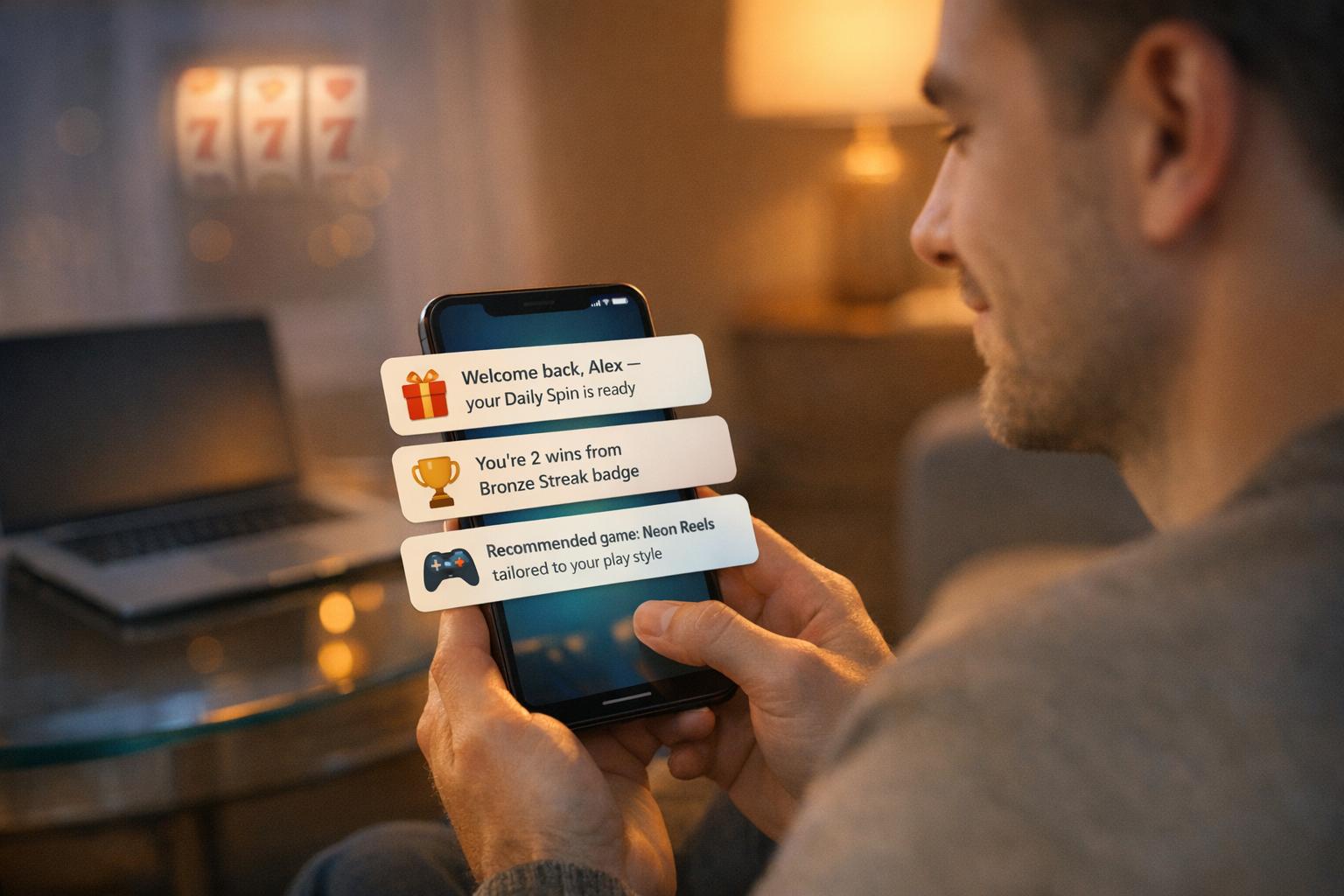
Over 50% of iGaming players stop engaging within a year. Personalized messaging is a proven way to keep players active and loyal. By using player data like game preferences, session habits, and spending trends, operators can craft messages that feel relevant and timely. This approach boosts click-through rates, reactivation efforts, and overall retention.
Key Takeaways:
Personalized offers generate 2.5x higher click-through rates than generic campaigns.
Behavioral triggers like recent wins or losses help tailor messages effectively.
AI tools, such as Enreach, automate messaging on platforms like Telegram, saving time and improving engagement.
Gamification (e.g., progress trackers and challenges) enhances player interaction and reduces churn.
Why It Works:
Players expect tailored experiences: 80% actively seek personalization.
Emotional connections, like celebrating milestones, increase engagement by 29%.
Timed messaging ensures relevance, preventing churn within critical windows.
By combining segmentation, automation, and gamification, iGaming operators can transform standard interactions into meaningful player experiences. Start with small, measurable goals - like a 15% retention boost in 90 days - and refine based on results.
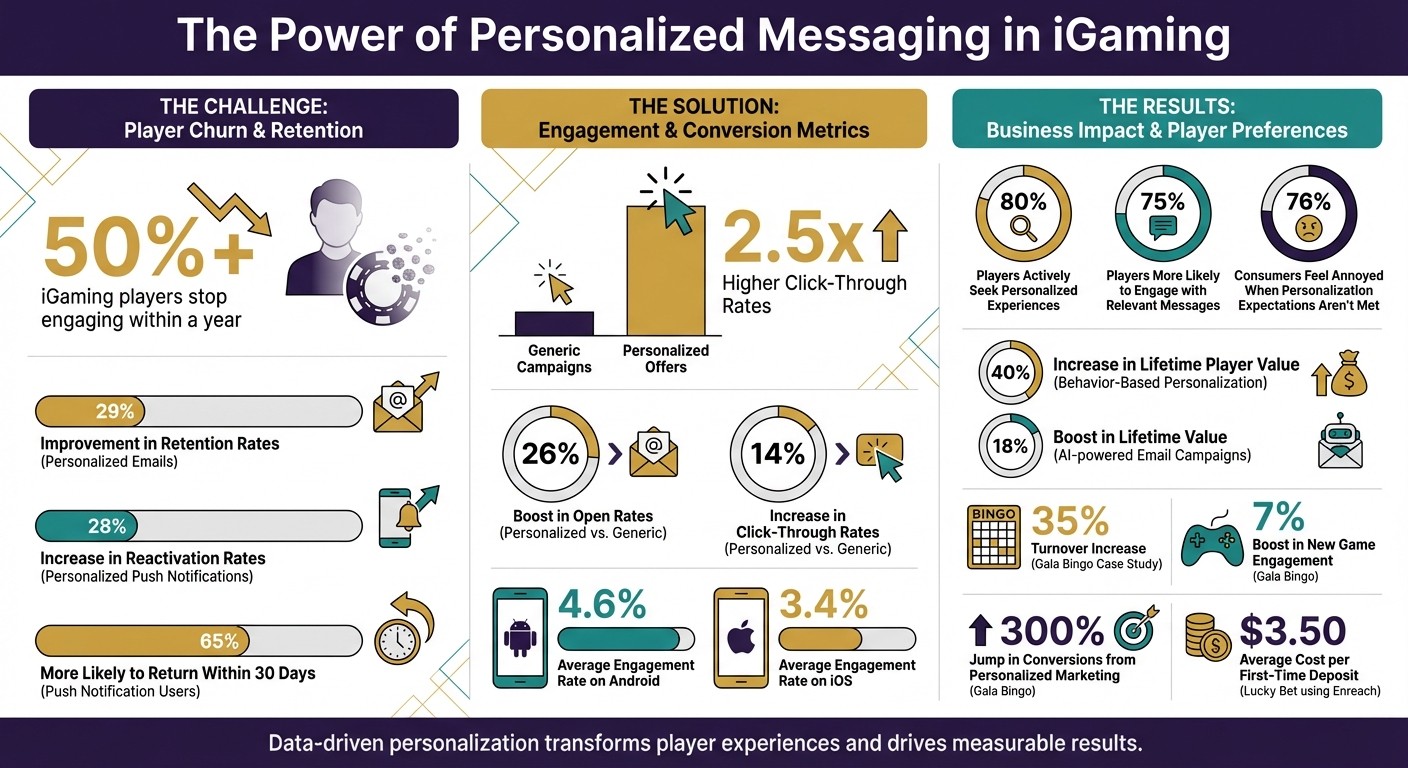
Personalized Messaging Impact on iGaming Player Retention and Engagement Statistics
What Personalized Messaging Means in iGaming
In the world of iGaming, personalized messaging means tailoring communications to match each player's unique behaviors and preferences. Instead of sending out a generic "Check out our casino" message to everyone, operators craft messages that resonate on a personal level - highlighting details like a player's favorite blackjack table, recent deposits, or typical playing hours.
This strategy works because players generate a wealth of behavioral data with every spin, bet, and login. Using this data, operators can create messages that feel relevant and drive engagement. For instance, personalized campaigns have been shown to boost open rates by up to 26% and click-through rates by 14% compared to generic campaigns. Imagine a message like this: "John, your blackjack streak is impressive! Enjoy 20% extra on your next $50.00 deposit today." Specificity like this transforms a message from something forgettable into one that prompts action.
How Data Powers Personalization
Player data is the backbone of personalized messaging. Operators gather this information through in-app tracking, transaction records, and surveys. Using CRM systems, they can trigger real-time messages based on a player's actions.
Key data points include game preferences (e.g., slots versus table games), session lengths, deposit habits, withdrawal trends, and even demographic details like location or age. This data allows operators to use behavioral triggers to send messages at just the right time. For example, a player who recently experienced a losing streak might receive a "we miss you" bonus to encourage them to return. Systems can also segment players by device type, preferred payment methods (like crypto wallets), or gaming communities they've joined - such as a "Sports Betting Daily" group - tailoring the message to match their interests.
Of course, compliance is a critical part of this process. Operators must adhere to regulations like GDPR and CCPA by obtaining opt-in consent and anonymizing data where necessary. This ensures trust while still delivering personalized experiences.
Why Personalized Messages Build Emotional Connections
Personalized messaging taps into psychological principles to create strong emotional connections that generic campaigns simply can’t replicate. For example, when a player receives a message like "Congrats on leveling up in Poker!" - directly referencing their recent achievement - it triggers dopamine, fostering a sense of accomplishment and belonging. Similarly, tailored rewards reinforce the idea that players are valued.
The results speak for themselves. Personalized emails have been shown to improve retention rates by 29%, and iGaming platforms using behavior-based personalization report a 40% increase in lifetime player value. Additionally, 75% of players are more likely to engage with relevant messages than with generic ones. By celebrating personal milestones or referencing peer achievements (a form of social proof), operators turn routine interactions into meaningful experiences that keep players engaged.
Next, explore how to design personalized messaging campaigns that bring these strategies to life.
How to Build Personalized Messaging Campaigns
Creating personalized messaging campaigns starts with understanding your players and what motivates them. This involves segmenting your audience, developing templates that align with real player behaviors, and timing your outreach for maximum impact. Let’s break down how segmentation, automation, and timing can shape effective campaigns.
Segment Players for Targeted Messages
Segmentation is more than just grouping players by demographics. Using RFM(D) analysis - Recency (last activity), Frequency (engagement level), Monetary value (spending), and Duration (playtime) - you can categorize players into tiers like Negative, Neutral, Positive, and Premium. This helps allocate resources and bonuses effectively. For instance:
Aces: High spenders engaging 20+ days a month. These players thrive on VIP perks like exclusive tournaments and high-value bonuses.
Sixes: Low spenders who stick to one game type. They respond better to low-barrier "come back" offers or educational content.
Dynamic segmentation, often powered by AI, adjusts groups in real time as player behaviors shift. For example, a casino enthusiast who suddenly starts betting on sports during a major tournament should receive odds alerts instead of slot promotions.
As Sonny Cott, Chief Insights Officer at beBettor, explains: "Player wealth scores... are an example of how player segmentation is moving beyond basic measures to deliver a truly holistic understanding of the player".
However, don’t overcomplicate things by creating too many micro-segments. This can make your campaigns harder to manage and less effective. The goal is to balance precision with simplicity, driving better conversions and fostering loyalty.
Create Message Templates Based on Player Actions
With your segments defined, the next step is crafting messages that cater to specific behaviors. Set up automated templates triggered by key actions like registration_completed, first_deposit, or bet_placed. Use conditional logic to further personalize content based on details like deposit size, location, or favorite game type.
For example, Gala Bingo saw impressive results in July 2024 after using the Opti-X platform to implement personalized game recommendations. They reported a 35% turnover increase, a 7% boost in new game engagement, and a 300% jump in conversions from their tailored marketing efforts.
Start with three essential lifecycle templates:
Registration to First Deposit: Welcome new players and encourage their first activity.
First Deposit to Second Session: Build momentum with incentives or recommendations.
Early Inactivity Prevention: Re-engage players showing signs of dropping off.
It’s also crucial to integrate responsible gaming measures. For instance, suppress promotional messages for players showing high-intensity activity or those in a cooldown period.
Time Your Messages for Better Engagement
Timing is everything. Messages should be sent immediately after key actions and to inactive users within 72 hours to prevent churn. Telegram outreach tools and push notifications are particularly effective, with players returning 65% more often within 30 days. Engagement rates average 4.6% on Android and 3.4% on iOS.
To maximize impact, avoid bombarding players during or after high-intensity sessions. Instead, optimize delivery times based on individual habits. For example, if a player consistently logs in at 8:00 PM on weekdays, send time-sensitive offers around that window - not at 10:00 AM when they’re unlikely to engage.
This kind of precise timing strengthens the personalized experience. With over 50% of iGaming players churning within a year, timely lifecycle messaging is a crucial tool for keeping players engaged.
Using AI Agents for Automated Messaging
Building on targeted segmentation and well-timed messaging, AI agents take personalization to the next level by automating outreach around the clock. These tools handle large-scale, personalized communication, freeing your team from manual tasks while still delivering the genuine, human-like interactions players expect. Operating 24/7, AI agents can engage thousands of players simultaneously on platforms like Telegram, a hub for active iGaming communities. This approach enhances earlier strategies, allowing personalized engagement to scale effortlessly.
What AI Agents Do for iGaming
AI agents streamline outreach, managing everything from the first interaction to conversion. For instance, Enreach (https://enreach.ai) uses advanced AI to refine automated messaging, specifically on Telegram. With access to a database of over 500 million Telegram leads, the platform filters by factors like interests, language, location, and activity to target the right audience effectively. These AI tools initiate conversations automatically, focusing on potential players who fit your criteria.
What makes modern AI agents so effective is their training. Enreach’s AI, for example, has learned from over 30 million conversations, allowing it to understand context, answer player questions naturally, and guide users through processes like registration and deposits. This expertise translates into cost savings - Lucky Bet reported an average cost of $3.50 per first-time deposit across Tier 1, 2, and 3 markets in their first year using Enreach’s Telegram tools.
AI agents also use player data - such as profiles, behavior patterns, financial history, and engagement metrics - to tailor each interaction. They adjust their tone and approach depending on whether the player is new or returning, creating a more personalized experience.
Making AI Messages Feel Natural
While AI agents improve efficiency, it’s critical to ensure their communication feels human. Automation risks sounding robotic or impersonal, which can frustrate players. In fact, 76% of consumers report feeling annoyed when their expectations for personalization aren’t met. To avoid this, AI-driven messages must be designed to mimic natural, conversational tones.
Start by crafting conversational flows that adapt to player responses. Instead of following rigid scripts, create branching dialogues that feel dynamic. For example, if a player inquires about payment options, the AI should provide specific information about crypto or traditional banking methods instead of offering a vague response like "we accept various methods." Incorporating personal details - such as the player’s name, location for region-specific offers, or preferred language - can also make interactions feel more genuine.
Timing plays a big role in how natural messages come across. AI agents should align messaging with player activity, reaching out when users are typically online rather than at random times. Avoid overloading players with multiple messages in rapid succession, which can feel spammy. Instead, space out communications and follow up strategically, such as when a player has started registration but hasn’t completed their deposit within 24 hours.
The goal is to balance automation with a personal touch. Let AI manage the heavy lifting while your team refines the messaging strategy, ensuring every interaction feels like a meaningful conversation rather than just another marketing effort.
Adding Gamification to Your Messages
Building on targeted messaging and AI automation, gamification takes player interaction to the next level by turning messages into interactive, rewarding experiences. Instead of just promoting offers, gamified messages allow players to track their progress, unlock rewards, and even compete with others. Why does this matter? Because nearly 55% of iGaming players leave within their first year. Gamification helps tackle this early churn by encouraging long-term engagement and loyalty. By integrating game-like mechanics into your messaging strategy, you can inspire daily interaction and build habits that keep players coming back.
The key is to tailor gamification to individual player behavior.
Add Progress Trackers to Messages
Progress trackers give players a sense of direction and accomplishment. Send messages that highlight milestones like, "Identity verified! You're 1 step away from your first deposit bonus" or "You've reached Silver VIP status - just a little more progress to unlock Gold rewards." These updates help reduce early churn by building confidence during critical moments like registration and verification.
Automate triggers to acknowledge key actions instantly. For example, when a player places their first bet, send a message right away to celebrate and outline the next milestone. Push notifications can be especially effective here - users who enable them are 65% more likely to return to an app within 30 days. Including visual elements like progress bars can further motivate players by tapping into their natural desire to complete tasks.
That said, avoid overwhelming players with too many updates. Use suppression rules and cooldown periods to prevent message fatigue, especially for highly active players. Segment your audience based on their lifecycle stage. A beginner might receive a message like, "3 games played - try 2 more to unlock your welcome bonus", while a long-term VIP might get something more advanced, such as, "You're just a few steps away from unlocking Platinum rewards."
Create Challenges That Reward Engagement
Challenges provide players with clear goals and a sense of purpose beyond simply placing bets. Personalize these quests based on player preferences. For instance, a slots fan might get a message like, "Play 3 of your favorite slots this week for bonus spins", while a blackjack enthusiast might see, "Win 5 hands in a row for an extra bonus." This level of personalization helps combat the fatigue that comes with generic offers.
Design challenges to achieve different goals. For long-term loyalty, try milestone challenges like, "Reach 100 total deposits for exclusive VIP access." To drive immediate action, use flash challenges such as, "Deposit $50.00 in the next 2 hours for a 100% match." For re-engagement, consider messages like, "We miss you! Play your favorite game for 10 free spins." Incorporating incentives with product education and subtle nudges - rather than just relying on bonuses - helps sustain engagement over time.
Leaderboards and tiered challenges can also spark a sense of community and friendly competition. For example, invite players to a weekend poker tournament with exciting prizes or introduce daily streaks like, "You've logged in 7 days straight - keep your streak alive for an extra reward." Features like streak freezes can encourage responsible play while maintaining momentum.
Monitor which challenges resonate most with your audience and adjust quickly if engagement starts to dip. Gamification also offers a way to gather zero-party data - details players willingly share - which can be used to make future messages and challenges even more personalized. The goal is to create a seamless cycle where every completed challenge naturally leads to the next, keeping players engaged and invested in their journey with your platform. This approach not only boosts player interaction but also provides valuable insights to refine your strategy over time.
Track Results and Improve Your Campaigns
Once you've launched gamified messages and workflows, the next step is to analyze the results. Use the data generated by iGaming platforms to identify what’s working and where players lose interest. This data is your roadmap for understanding the metrics that matter most for retaining players. By making campaign adjustments based on these insights, you can ensure your personalized messaging keeps players engaged and loyal.
Metrics to Track for Player Retention
Start by monitoring engagement metrics like open rates and response rates. These reveal whether your message grabs attention. Next, examine conversion metrics, such as how many players complete registration, make their first deposit, or claim a bonus after receiving your message. For the bigger picture, focus on retention metrics to see if players remain active beyond their initial sessions.
One particularly useful metric is session depth, which tracks how far players progress through your messaging funnel before disengaging. For example, if most players drop off after the second message in your welcome series, it’s a clear sign that the third message needs reworking. Additionally, keep an eye on bot response times - even slight delays can frustrate players who expect instant replies. Calculating your cost per conversation can also help you determine the return on investment (ROI) for your campaigns.
To get accurate insights, test each message variation with at least 200 prospects. This ensures your results are statistically reliable. Also, analyze performance by lifecycle stage - a message that resonates with new sign-ups might not work as well for VIP players.
Test Message Variations for Better Results
Once you’ve identified key metrics, refine your campaigns through A/B testing. Focus on three main areas: opening hooks (e.g., casual vs. professional tones), value propositions (e.g., free spins vs. deposit bonuses), and calls-to-action (e.g., asking a question vs. making a direct request). For example, in July 2024, Gala Bingo used Opti-X to implement personalized game recommendations, achieving a 35% turnover increase, a 7% boost in new game adoption, and a 300% jump in conversions from personalized marketing.
Keep your initial messages concise - 50–70 words - to suit mobile screens and fast-scrolling habits. Timing also matters; messages sent during peak hours might get overlooked, while off-peak sends could reach players when they’re more receptive. Assign a conversion goal to each message journey so you can measure its effectiveness in driving players to the next step.
Regularly review your tests because player preferences evolve. A workflow that performed well three months ago might no longer resonate. For instance, in September 2024, Optimove and Symphony Solutions introduced AI-driven personalized gaming lobbies called "Intelligent Layouts", resulting in a 7% turnover increase and a 26% rise in engagement with new games. The takeaway? Continuous testing and tweaking are non-negotiable in a market where 80% of players actively seek personalized experiences.
Conclusion
Tailored messaging is changing the way iGaming operators connect with their players, moving away from generic promotions toward targeted, data-driven communication. By analyzing player data, you can craft messages that truly resonate. The results speak for themselves: casinos using personalized push notifications have seen reactivation rates climb by 28%, while AI-powered email campaigns have boosted lifetime value by 18%.
The strategies outlined in this guide - like leveraging behavioral triggers, perfecting timing, incorporating gamification, and using AI automation - create a cohesive approach to keeping players engaged beyond their initial deposit. Tools such as Enreach make implementation more straightforward, offering AI Agents that handle automated Telegram outreach while maintaining the personal touch players value.
Start by auditing your player data, testing AI-generated templates that reflect player actions, and setting measurable goals - like achieving a 15% retention increase within 90 days. These steps help refine your strategy and keep you ahead in a market where personalized experiences are no longer optional but expected.
In today’s competitive iGaming space, blending segmentation, automation, and ongoing experimentation transforms everyday interactions into moments that foster loyalty and keep players coming back. This guide has highlighted how these techniques come together to create a winning formula.
FAQs
What player data should I use for personalization without crossing privacy lines?
To respect player privacy and adhere to regulations, it's essential to work with anonymized data. This includes analyzing trends like player behavior patterns, engagement metrics, and interaction history - without relying on any personally identifiable information (PII). By focusing on aggregated and non-identifiable data, you can still deliver personalized experiences while ensuring privacy remains a top priority.
Which 3 automated messages should I launch first to improve retention fast?
If you want to boost retention fast, try launching these three automated messages:
Welcome Message: Send a warm, personalized greeting to new players. Use this opportunity to introduce them to your platform and encourage early engagement. A friendly welcome can make a lasting first impression.
Re-engagement Message: Reach out to players who haven’t been active for a while. Remind them about their favorite games or highlight current promotions to entice them back.
Loyalty Notification: Let players know about their loyalty points or rewards. This not only strengthens their connection to your platform but also motivates them to stay active and continue earning.
By tailoring communication with these messages, you can create a more engaging experience and keep players coming back.
How do I prevent personalized messaging from feeling spammy to players?
To make your messages count, ensure they are relevant, respectful, and sent at the right time. Use player data to customize messages based on behavior and preferences - steering clear of generic or overwhelming communication. Tools like bots or Mini Apps can help deliver messages naturally and without being intrusive. Equally important, stay compliant with regulations and avoid overloading players with too many messages. This approach helps build trust and loyalty while minimizing the chances of your outreach being seen as spam.
Related Blog Posts
Over 50% of iGaming players stop engaging within a year. Personalized messaging is a proven way to keep players active and loyal. By using player data like game preferences, session habits, and spending trends, operators can craft messages that feel relevant and timely. This approach boosts click-through rates, reactivation efforts, and overall retention.
Key Takeaways:
Personalized offers generate 2.5x higher click-through rates than generic campaigns.
Behavioral triggers like recent wins or losses help tailor messages effectively.
AI tools, such as Enreach, automate messaging on platforms like Telegram, saving time and improving engagement.
Gamification (e.g., progress trackers and challenges) enhances player interaction and reduces churn.
Why It Works:
Players expect tailored experiences: 80% actively seek personalization.
Emotional connections, like celebrating milestones, increase engagement by 29%.
Timed messaging ensures relevance, preventing churn within critical windows.
By combining segmentation, automation, and gamification, iGaming operators can transform standard interactions into meaningful player experiences. Start with small, measurable goals - like a 15% retention boost in 90 days - and refine based on results.
Personalized Messaging Impact on iGaming Player Retention and Engagement Statistics
What Personalized Messaging Means in iGaming
In the world of iGaming, personalized messaging means tailoring communications to match each player's unique behaviors and preferences. Instead of sending out a generic "Check out our casino" message to everyone, operators craft messages that resonate on a personal level - highlighting details like a player's favorite blackjack table, recent deposits, or typical playing hours.
This strategy works because players generate a wealth of behavioral data with every spin, bet, and login. Using this data, operators can create messages that feel relevant and drive engagement. For instance, personalized campaigns have been shown to boost open rates by up to 26% and click-through rates by 14% compared to generic campaigns. Imagine a message like this: "John, your blackjack streak is impressive! Enjoy 20% extra on your next $50.00 deposit today." Specificity like this transforms a message from something forgettable into one that prompts action.
How Data Powers Personalization
Player data is the backbone of personalized messaging. Operators gather this information through in-app tracking, transaction records, and surveys. Using CRM systems, they can trigger real-time messages based on a player's actions.
Key data points include game preferences (e.g., slots versus table games), session lengths, deposit habits, withdrawal trends, and even demographic details like location or age. This data allows operators to use behavioral triggers to send messages at just the right time. For example, a player who recently experienced a losing streak might receive a "we miss you" bonus to encourage them to return. Systems can also segment players by device type, preferred payment methods (like crypto wallets), or gaming communities they've joined - such as a "Sports Betting Daily" group - tailoring the message to match their interests.
Of course, compliance is a critical part of this process. Operators must adhere to regulations like GDPR and CCPA by obtaining opt-in consent and anonymizing data where necessary. This ensures trust while still delivering personalized experiences.
Why Personalized Messages Build Emotional Connections
Personalized messaging taps into psychological principles to create strong emotional connections that generic campaigns simply can’t replicate. For example, when a player receives a message like "Congrats on leveling up in Poker!" - directly referencing their recent achievement - it triggers dopamine, fostering a sense of accomplishment and belonging. Similarly, tailored rewards reinforce the idea that players are valued.
The results speak for themselves. Personalized emails have been shown to improve retention rates by 29%, and iGaming platforms using behavior-based personalization report a 40% increase in lifetime player value. Additionally, 75% of players are more likely to engage with relevant messages than with generic ones. By celebrating personal milestones or referencing peer achievements (a form of social proof), operators turn routine interactions into meaningful experiences that keep players engaged.
Next, explore how to design personalized messaging campaigns that bring these strategies to life.
How to Build Personalized Messaging Campaigns
Creating personalized messaging campaigns starts with understanding your players and what motivates them. This involves segmenting your audience, developing templates that align with real player behaviors, and timing your outreach for maximum impact. Let’s break down how segmentation, automation, and timing can shape effective campaigns.
Segment Players for Targeted Messages
Segmentation is more than just grouping players by demographics. Using RFM(D) analysis - Recency (last activity), Frequency (engagement level), Monetary value (spending), and Duration (playtime) - you can categorize players into tiers like Negative, Neutral, Positive, and Premium. This helps allocate resources and bonuses effectively. For instance:
Aces: High spenders engaging 20+ days a month. These players thrive on VIP perks like exclusive tournaments and high-value bonuses.
Sixes: Low spenders who stick to one game type. They respond better to low-barrier "come back" offers or educational content.
Dynamic segmentation, often powered by AI, adjusts groups in real time as player behaviors shift. For example, a casino enthusiast who suddenly starts betting on sports during a major tournament should receive odds alerts instead of slot promotions.
As Sonny Cott, Chief Insights Officer at beBettor, explains: "Player wealth scores... are an example of how player segmentation is moving beyond basic measures to deliver a truly holistic understanding of the player".
However, don’t overcomplicate things by creating too many micro-segments. This can make your campaigns harder to manage and less effective. The goal is to balance precision with simplicity, driving better conversions and fostering loyalty.
Create Message Templates Based on Player Actions
With your segments defined, the next step is crafting messages that cater to specific behaviors. Set up automated templates triggered by key actions like registration_completed, first_deposit, or bet_placed. Use conditional logic to further personalize content based on details like deposit size, location, or favorite game type.
For example, Gala Bingo saw impressive results in July 2024 after using the Opti-X platform to implement personalized game recommendations. They reported a 35% turnover increase, a 7% boost in new game engagement, and a 300% jump in conversions from their tailored marketing efforts.
Start with three essential lifecycle templates:
Registration to First Deposit: Welcome new players and encourage their first activity.
First Deposit to Second Session: Build momentum with incentives or recommendations.
Early Inactivity Prevention: Re-engage players showing signs of dropping off.
It’s also crucial to integrate responsible gaming measures. For instance, suppress promotional messages for players showing high-intensity activity or those in a cooldown period.
Time Your Messages for Better Engagement
Timing is everything. Messages should be sent immediately after key actions and to inactive users within 72 hours to prevent churn. Telegram outreach tools and push notifications are particularly effective, with players returning 65% more often within 30 days. Engagement rates average 4.6% on Android and 3.4% on iOS.
To maximize impact, avoid bombarding players during or after high-intensity sessions. Instead, optimize delivery times based on individual habits. For example, if a player consistently logs in at 8:00 PM on weekdays, send time-sensitive offers around that window - not at 10:00 AM when they’re unlikely to engage.
This kind of precise timing strengthens the personalized experience. With over 50% of iGaming players churning within a year, timely lifecycle messaging is a crucial tool for keeping players engaged.
Using AI Agents for Automated Messaging
Building on targeted segmentation and well-timed messaging, AI agents take personalization to the next level by automating outreach around the clock. These tools handle large-scale, personalized communication, freeing your team from manual tasks while still delivering the genuine, human-like interactions players expect. Operating 24/7, AI agents can engage thousands of players simultaneously on platforms like Telegram, a hub for active iGaming communities. This approach enhances earlier strategies, allowing personalized engagement to scale effortlessly.
What AI Agents Do for iGaming
AI agents streamline outreach, managing everything from the first interaction to conversion. For instance, Enreach (https://enreach.ai) uses advanced AI to refine automated messaging, specifically on Telegram. With access to a database of over 500 million Telegram leads, the platform filters by factors like interests, language, location, and activity to target the right audience effectively. These AI tools initiate conversations automatically, focusing on potential players who fit your criteria.
What makes modern AI agents so effective is their training. Enreach’s AI, for example, has learned from over 30 million conversations, allowing it to understand context, answer player questions naturally, and guide users through processes like registration and deposits. This expertise translates into cost savings - Lucky Bet reported an average cost of $3.50 per first-time deposit across Tier 1, 2, and 3 markets in their first year using Enreach’s Telegram tools.
AI agents also use player data - such as profiles, behavior patterns, financial history, and engagement metrics - to tailor each interaction. They adjust their tone and approach depending on whether the player is new or returning, creating a more personalized experience.
Making AI Messages Feel Natural
While AI agents improve efficiency, it’s critical to ensure their communication feels human. Automation risks sounding robotic or impersonal, which can frustrate players. In fact, 76% of consumers report feeling annoyed when their expectations for personalization aren’t met. To avoid this, AI-driven messages must be designed to mimic natural, conversational tones.
Start by crafting conversational flows that adapt to player responses. Instead of following rigid scripts, create branching dialogues that feel dynamic. For example, if a player inquires about payment options, the AI should provide specific information about crypto or traditional banking methods instead of offering a vague response like "we accept various methods." Incorporating personal details - such as the player’s name, location for region-specific offers, or preferred language - can also make interactions feel more genuine.
Timing plays a big role in how natural messages come across. AI agents should align messaging with player activity, reaching out when users are typically online rather than at random times. Avoid overloading players with multiple messages in rapid succession, which can feel spammy. Instead, space out communications and follow up strategically, such as when a player has started registration but hasn’t completed their deposit within 24 hours.
The goal is to balance automation with a personal touch. Let AI manage the heavy lifting while your team refines the messaging strategy, ensuring every interaction feels like a meaningful conversation rather than just another marketing effort.
Adding Gamification to Your Messages
Building on targeted messaging and AI automation, gamification takes player interaction to the next level by turning messages into interactive, rewarding experiences. Instead of just promoting offers, gamified messages allow players to track their progress, unlock rewards, and even compete with others. Why does this matter? Because nearly 55% of iGaming players leave within their first year. Gamification helps tackle this early churn by encouraging long-term engagement and loyalty. By integrating game-like mechanics into your messaging strategy, you can inspire daily interaction and build habits that keep players coming back.
The key is to tailor gamification to individual player behavior.
Add Progress Trackers to Messages
Progress trackers give players a sense of direction and accomplishment. Send messages that highlight milestones like, "Identity verified! You're 1 step away from your first deposit bonus" or "You've reached Silver VIP status - just a little more progress to unlock Gold rewards." These updates help reduce early churn by building confidence during critical moments like registration and verification.
Automate triggers to acknowledge key actions instantly. For example, when a player places their first bet, send a message right away to celebrate and outline the next milestone. Push notifications can be especially effective here - users who enable them are 65% more likely to return to an app within 30 days. Including visual elements like progress bars can further motivate players by tapping into their natural desire to complete tasks.
That said, avoid overwhelming players with too many updates. Use suppression rules and cooldown periods to prevent message fatigue, especially for highly active players. Segment your audience based on their lifecycle stage. A beginner might receive a message like, "3 games played - try 2 more to unlock your welcome bonus", while a long-term VIP might get something more advanced, such as, "You're just a few steps away from unlocking Platinum rewards."
Create Challenges That Reward Engagement
Challenges provide players with clear goals and a sense of purpose beyond simply placing bets. Personalize these quests based on player preferences. For instance, a slots fan might get a message like, "Play 3 of your favorite slots this week for bonus spins", while a blackjack enthusiast might see, "Win 5 hands in a row for an extra bonus." This level of personalization helps combat the fatigue that comes with generic offers.
Design challenges to achieve different goals. For long-term loyalty, try milestone challenges like, "Reach 100 total deposits for exclusive VIP access." To drive immediate action, use flash challenges such as, "Deposit $50.00 in the next 2 hours for a 100% match." For re-engagement, consider messages like, "We miss you! Play your favorite game for 10 free spins." Incorporating incentives with product education and subtle nudges - rather than just relying on bonuses - helps sustain engagement over time.
Leaderboards and tiered challenges can also spark a sense of community and friendly competition. For example, invite players to a weekend poker tournament with exciting prizes or introduce daily streaks like, "You've logged in 7 days straight - keep your streak alive for an extra reward." Features like streak freezes can encourage responsible play while maintaining momentum.
Monitor which challenges resonate most with your audience and adjust quickly if engagement starts to dip. Gamification also offers a way to gather zero-party data - details players willingly share - which can be used to make future messages and challenges even more personalized. The goal is to create a seamless cycle where every completed challenge naturally leads to the next, keeping players engaged and invested in their journey with your platform. This approach not only boosts player interaction but also provides valuable insights to refine your strategy over time.
Track Results and Improve Your Campaigns
Once you've launched gamified messages and workflows, the next step is to analyze the results. Use the data generated by iGaming platforms to identify what’s working and where players lose interest. This data is your roadmap for understanding the metrics that matter most for retaining players. By making campaign adjustments based on these insights, you can ensure your personalized messaging keeps players engaged and loyal.
Metrics to Track for Player Retention
Start by monitoring engagement metrics like open rates and response rates. These reveal whether your message grabs attention. Next, examine conversion metrics, such as how many players complete registration, make their first deposit, or claim a bonus after receiving your message. For the bigger picture, focus on retention metrics to see if players remain active beyond their initial sessions.
One particularly useful metric is session depth, which tracks how far players progress through your messaging funnel before disengaging. For example, if most players drop off after the second message in your welcome series, it’s a clear sign that the third message needs reworking. Additionally, keep an eye on bot response times - even slight delays can frustrate players who expect instant replies. Calculating your cost per conversation can also help you determine the return on investment (ROI) for your campaigns.
To get accurate insights, test each message variation with at least 200 prospects. This ensures your results are statistically reliable. Also, analyze performance by lifecycle stage - a message that resonates with new sign-ups might not work as well for VIP players.
Test Message Variations for Better Results
Once you’ve identified key metrics, refine your campaigns through A/B testing. Focus on three main areas: opening hooks (e.g., casual vs. professional tones), value propositions (e.g., free spins vs. deposit bonuses), and calls-to-action (e.g., asking a question vs. making a direct request). For example, in July 2024, Gala Bingo used Opti-X to implement personalized game recommendations, achieving a 35% turnover increase, a 7% boost in new game adoption, and a 300% jump in conversions from personalized marketing.
Keep your initial messages concise - 50–70 words - to suit mobile screens and fast-scrolling habits. Timing also matters; messages sent during peak hours might get overlooked, while off-peak sends could reach players when they’re more receptive. Assign a conversion goal to each message journey so you can measure its effectiveness in driving players to the next step.
Regularly review your tests because player preferences evolve. A workflow that performed well three months ago might no longer resonate. For instance, in September 2024, Optimove and Symphony Solutions introduced AI-driven personalized gaming lobbies called "Intelligent Layouts", resulting in a 7% turnover increase and a 26% rise in engagement with new games. The takeaway? Continuous testing and tweaking are non-negotiable in a market where 80% of players actively seek personalized experiences.
Conclusion
Tailored messaging is changing the way iGaming operators connect with their players, moving away from generic promotions toward targeted, data-driven communication. By analyzing player data, you can craft messages that truly resonate. The results speak for themselves: casinos using personalized push notifications have seen reactivation rates climb by 28%, while AI-powered email campaigns have boosted lifetime value by 18%.
The strategies outlined in this guide - like leveraging behavioral triggers, perfecting timing, incorporating gamification, and using AI automation - create a cohesive approach to keeping players engaged beyond their initial deposit. Tools such as Enreach make implementation more straightforward, offering AI Agents that handle automated Telegram outreach while maintaining the personal touch players value.
Start by auditing your player data, testing AI-generated templates that reflect player actions, and setting measurable goals - like achieving a 15% retention increase within 90 days. These steps help refine your strategy and keep you ahead in a market where personalized experiences are no longer optional but expected.
In today’s competitive iGaming space, blending segmentation, automation, and ongoing experimentation transforms everyday interactions into moments that foster loyalty and keep players coming back. This guide has highlighted how these techniques come together to create a winning formula.
FAQs
What player data should I use for personalization without crossing privacy lines?
To respect player privacy and adhere to regulations, it's essential to work with anonymized data. This includes analyzing trends like player behavior patterns, engagement metrics, and interaction history - without relying on any personally identifiable information (PII). By focusing on aggregated and non-identifiable data, you can still deliver personalized experiences while ensuring privacy remains a top priority.
Which 3 automated messages should I launch first to improve retention fast?
If you want to boost retention fast, try launching these three automated messages:
Welcome Message: Send a warm, personalized greeting to new players. Use this opportunity to introduce them to your platform and encourage early engagement. A friendly welcome can make a lasting first impression.
Re-engagement Message: Reach out to players who haven’t been active for a while. Remind them about their favorite games or highlight current promotions to entice them back.
Loyalty Notification: Let players know about their loyalty points or rewards. This not only strengthens their connection to your platform but also motivates them to stay active and continue earning.
By tailoring communication with these messages, you can create a more engaging experience and keep players coming back.
How do I prevent personalized messaging from feeling spammy to players?
To make your messages count, ensure they are relevant, respectful, and sent at the right time. Use player data to customize messages based on behavior and preferences - steering clear of generic or overwhelming communication. Tools like bots or Mini Apps can help deliver messages naturally and without being intrusive. Equally important, stay compliant with regulations and avoid overloading players with too many messages. This approach helps build trust and loyalty while minimizing the chances of your outreach being seen as spam.
Related Blog Posts

Optimize Your Sales with Enreach.
Optimize Your Sales with Enreach.
Get access to a 500M person Leads Database, Automated Outreach and AI Sales Agents.
Get access to a 500M person Leads Database, Automated Outreach and AI Sales Agents.
More Info