AI Agents vs. Manual Outreach for FTDs
AI Agents vs. Manual Outreach for FTDs
Sales Technology
Apr 13, 2026
Apr 13, 2026
Compare AI agents and manual outreach for iGaming FTDs—cost per FTD, ROI, scalability, and when hybrid approaches work best.
Compare AI agents and manual outreach for iGaming FTDs—cost per FTD, ROI, scalability, and when hybrid approaches work best.

AI agents are transforming how iGaming operators secure first-time deposits (FTDs). Here's the quick takeaway:
AI agents automate repetitive tasks, handle thousands of interactions simultaneously, and deliver a 77x ROI, compared to 3.8x ROI for manual outreach. They’re cost-effective, scalable, and operate 24/7.
Manual outreach excels in personal touches, achieving higher engagement rates (e.g., 11.3% reply rate) and more revenue per campaign. However, it’s labor-intensive, costly (around $6,500/month per SDR), and hard to scale.
Key Metrics:
Cost per FTD: AI averages $30.50, while manual efforts cost significantly more.
Scalability: AI handles thousands of prospects; manual teams are limited by staffing.
ROI: AI campaigns deliver up to 4,038% ROI, versus manual outreach at 220–256% ROI.
For businesses prioritizing efficiency and scale, AI is the clear choice. Manual outreach remains valuable for high-value prospects requiring a personal touch. A hybrid approach balances AI’s efficiency with human expertise.
How AI Agents Handle Telegram Outreach
AI agents work as independent systems that analyze player data, interpret behavioral patterns, and deliver personalized messages - all without needing human input. Unlike traditional teams that operate within fixed hours, these agents function 24/7, responding in under 30 milliseconds. This constant availability ensures instant engagement across time zones, making global outreach seamless.
These agents excel in audience segmentation and messaging. They analyze player profiles to group users effectively, craft messages tailored to individual preferences, and monitor engagement metrics in real time. By leveraging natural language processing trained on over 30 million conversations, AI agents create personalized messages instead of relying on generic templates. When a player interacts, the system retrieves account details and adjusts follow-up messages based on prior exchanges, ensuring the conversation feels natural and relevant.
The ability to scale sets AI apart from manual methods. While human agents typically manage 5–10 conversations simultaneously, AI can handle hundreds or even thousands without any drop in performance. This scalability allows operators to reach tens of thousands of prospects each month. For example, iGaming operators aiming to secure first-time deposits (FTDs) can realistically target over 60,000 prospects monthly. Automation has revolutionized the industry, now managing about 85% of support interactions, with 58% of player issues fully resolved without human input.
Efficiency directly impacts FTD performance, as feedback loops continuously refine campaigns. Human specialists review results, identify gaps, and integrate insights into the AI system. This ongoing improvement sharpens campaign strategies, optimizing messaging, timing, and audience targeting. One standout example is Lucky Bet, which achieved an average cost of $3.50 per FTD across Tier 1, 2, and 3 markets in its first year using AI-powered outreach.
A hybrid approach balances AI and human expertise. While AI handles large-scale, predictable tasks like standard player outreach, more complex issues - such as VIP concerns or payment disputes - are escalated to human specialists. This model ensures that high-volume tasks benefit from automation while reserving human intervention for cases requiring emotional insight or nuanced problem-solving.
How Manual Outreach Works for First-Time Deposits
Manual outreach depends on human agents who personally craft messages, respond to player inquiries, and guide potential customers through the deposit process. This approach involves several steps, including verifying identities, reviewing documents, ensuring compliance, logging transactions, and reconciling accounts - all of which require individual attention and can take anywhere from a few minutes to several hours.
One of the standout strengths of manual outreach is its ability to deliver highly personalized interactions. Human agents are better equipped to handle objections, build trust, and foster meaningful connections. For example, in controlled tests, manual outreach achieved an 11.3% reply rate and a 7.8% positive reply rate, with meeting show rates reaching 71%, compared to 52% for AI-driven campaigns. As Muhammad, Founder of AI Agenix, pointed out:
human agents transformed objections into dialogues, whereas AI responded more literally.
However, manual outreach comes with its challenges. Scalability is a major hurdle, as the process is labor-intensive and prone to errors. Mistakes in manual processing can result in revenue losses of up to 5%. Additionally, a 59% increase in online payment fraud in Europe has forced some operators to expand their manual fraud teams by as much as 80% to keep up with the workload. This approach is particularly effective for high-value prospects but becomes less practical when cost-efficiency and scale are priorities. For instance, the monthly cost of a single sales development representative (SDR) is around $6,500, compared to just $120 for an AI agent.
Despite the higher costs, manual outreach can deliver substantial revenue. During a six-month test, human SDRs generated $147,000 in revenue, compared to $56,000 by AI agents - a 2.6x difference in absolute revenue. However, the return on investment (ROI) tells a different story: while human teams achieved a 3.8x ROI, AI systems delivered an impressive 77x ROI due to significantly lower costs. Additionally, managing manual teams requires about 5 hours of oversight per week, whereas AI systems only need around 1 hour.
Given these trade-offs, the most effective approach is to focus manual outreach efforts on high-value prospects where human judgment and a personal touch are crucial. Situations like resolving complex disputes, managing VIP players, or reviewing flagged transactions benefit greatly from human involvement. These insights highlight the strengths and limitations of manual outreach, setting the stage for a closer comparison with AI-driven methods.
Performance Metrics: AI Agents vs. Manual Outreach
When comparing AI agents with manual outreach, the differences in performance metrics stand out clearly.
Cost efficiency is where AI agents truly shine. Numbers show AI agents deliver a staggering 77x ROI, compared to just 3.8x for manual teams. This significant gap comes from AI's lower operational costs, making it a more budget-friendly option for scaling outreach efforts.
Conversion performance, however, tells a more complex story. Human SDRs (Sales Development Representatives) outperformed AI agents in absolute revenue, generating 2.6 times more revenue and achieving higher meeting show rates - 71% compared to AI's 52%. That said, AI agents have proven their worth in specific sectors like iGaming. For example, in Tier 1, 2, and 3 markets, AI agents achieved an average cost per first-time deposit (FTD) of just $3.50. Lucky Bet's Filipe shared this insight:
$3.5 avg cost per FTD across tier 1, 2 and 3 markets in the first year.
This highlights AI's ability to scale campaigns efficiently and cost-effectively.
Scalability is another area where AI agents outpace manual efforts. While human SDRs can handle around 15 prospects per month, AI agents can manage over 5,000 messages and analyze 100 prospects in the same timeframe. Scaling manual outreach requires hiring more SDRs, each costing around $6,500 per month. In contrast, AI systems can scale by simply adding $50 for every 1,000 additional emails. AI also eliminates the 12 hours per week that human SDRs typically spend on administrative tasks, offering continuous and multitasking capabilities without downtime.
AI's efficiency extends to compliance and consistency. These agents strictly adhere to Telegram messaging limits, automatically implement geo-blocking, and ensure mandatory age warnings (like "18+" notices in Brazil) are included. This level of precision reduces risks and maintains quality across campaigns.
Interestingly, a hybrid approach - where AI handles initial outreach and research while humans manage positive replies - shows impressive results. This method generated 2.5 times more revenue than human-only efforts, achieving a 9.2x ROI and a meeting show rate of 74%. By combining AI's speed and scalability with human expertise, businesses can unlock even greater potential for their FTD campaigns. This integration is a key component of B2B sales optimization for high-growth sectors.
Pros and Cons of AI Agents
AI agents offer clear benefits when it comes to reducing costs in iGaming outreach. They can process and enrich data for over 500 prospects in just seconds - work that would typically take a human growth marketer 10 to 12 hours per week. This rapid processing not only lowers operational expenses but also enables campaigns to run continuously, 24/7, without the need for human shifts. Additionally, AI agents respond to inquiries in under 30 minutes, a stark contrast to the 6 to 24 hours it usually takes for manual outreach. These advantages highlight how AI agents excel in efficiency compared to traditional methods.
Another key benefit is scalability. Manual outreach inevitably hits a point where expanding to include more prospects becomes unmanageable due to time limitations and declining quality. AI agents solve this issue by scaling through software, eliminating the need to hire additional staff to handle larger campaigns.
However, these operational perks come with notable challenges, particularly in regulatory compliance and quality control. Starting January 27, 2026, the FCC's One-to-One Consent Rule will require explicit, individual consent for AI-driven interactions. AI agents must disclose their identity as "automated systems" at the beginning of every conversation, and non-compliance can result in fines of up to $1,500 per violation under the TCPA. Major carriers like AT&T and Verizon also use AI-driven content filters to block messages that stray from pre-registered campaign templates.
Another risk lies in hallucinations, where AI agents may generate outdated or incorrect information. This can lead to consumer deception claims, damaging trust and potentially affecting FTD (First-Time Depositor) conversion rates. For operators in regulated markets, this makes it essential to implement human oversight for high-stakes interactions and maintain detailed audit trails, including timestamps and data sources, to ensure accountability.
Compliance requirements add another layer of complexity. AI agents must routinely update federal and state Do Not Call lists before initiating any interactions and adhere to quiet hours, typically between 8 p.m. and 9 a.m. in the recipient's local time zone. Using self-hosted AI models can reduce risks associated with third-party data use, which is critical since violations of data privacy laws like the CCPA can result in fines of up to $7,500 per infraction, or €20 million under GDPR. Despite these hurdles, 86% of consumers report that transparency about AI and data use fosters trust in brands. Successfully navigating these compliance challenges is essential for effectively leveraging AI agents in FTD campaigns.
Pros and Cons of Manual Outreach
Manual outreach stands out for its high level of personalization, making it possible to create offers tailored to individual users. By leveraging CRM data - such as gaming preferences, account balances, and recent wins - operators can craft messages that feel highly relevant. Adding personal touches, like referencing the specific Telegram group where the user was found (e.g., "Saw you in the Sports Betting Daily group"), makes the interaction feel authentic. This approach works particularly well in niche communities like poker, crypto-casinos, or sports betting, where users aged 18–40 with financial independence are more likely to convert into first-time deposits (FTDs).
The results speak for themselves: manual campaigns often achieve reply rates of 3–8%, outperforming the 2.1% average seen with large-scale automated blasts. When advanced personalization techniques are applied, reply rates can climb to 15–25%, and multi-layered personalization can push that even higher, to 25–40%. Another advantage of manual outreach is the ability to offer time-sensitive promotions, like a 2-hour 100% deposit match during peak gaming hours. These strategies create urgency, encouraging immediate action and driving FTDs. This hands-on, personalized approach offers a sharp contrast to the efficiency-driven methods of automation.
But manual outreach comes with significant challenges, particularly in terms of cost and scalability. The annual cost for a single Sales Development Representative (SDR) is steep - ranging from $75,000 to $100,000. This includes base pay (about $65,000), benefits and taxes ($18,000), training and onboarding ($5,000), and management overhead ($5,000). Additionally, new hires typically need 2–3 months to become fully productive.
Scaling manual outreach introduces even more hurdles. To avoid Telegram's spam filters, operators must limit cold messages to 20 per day per account, with delays of 30–60 seconds between sends. Reaching thousands of prospects requires managing 300–500 separate accounts, each of which needs a 300-day warming period to establish platform trust.
Compliance is another sticking point. Operators need to monitor geo-blocking and age-verification rules, such as Brazil’s "18+" requirement, across all accounts to safeguard their licenses. Failing to track opt-outs properly could lead to GDPR or CAN-SPAM violations, exposing teams to legal risks. Despite these obstacles, 45% of high-performing sales teams still prioritize manual outreach for initial contact with high-value prospects. While AI offers unmatched scalability, the nuanced, human touch of manual outreach remains critical for engaging specific audiences and maximizing impact in the right scenarios.
Enreach AI Agents: Pricing and Setup for FTD Campaigns
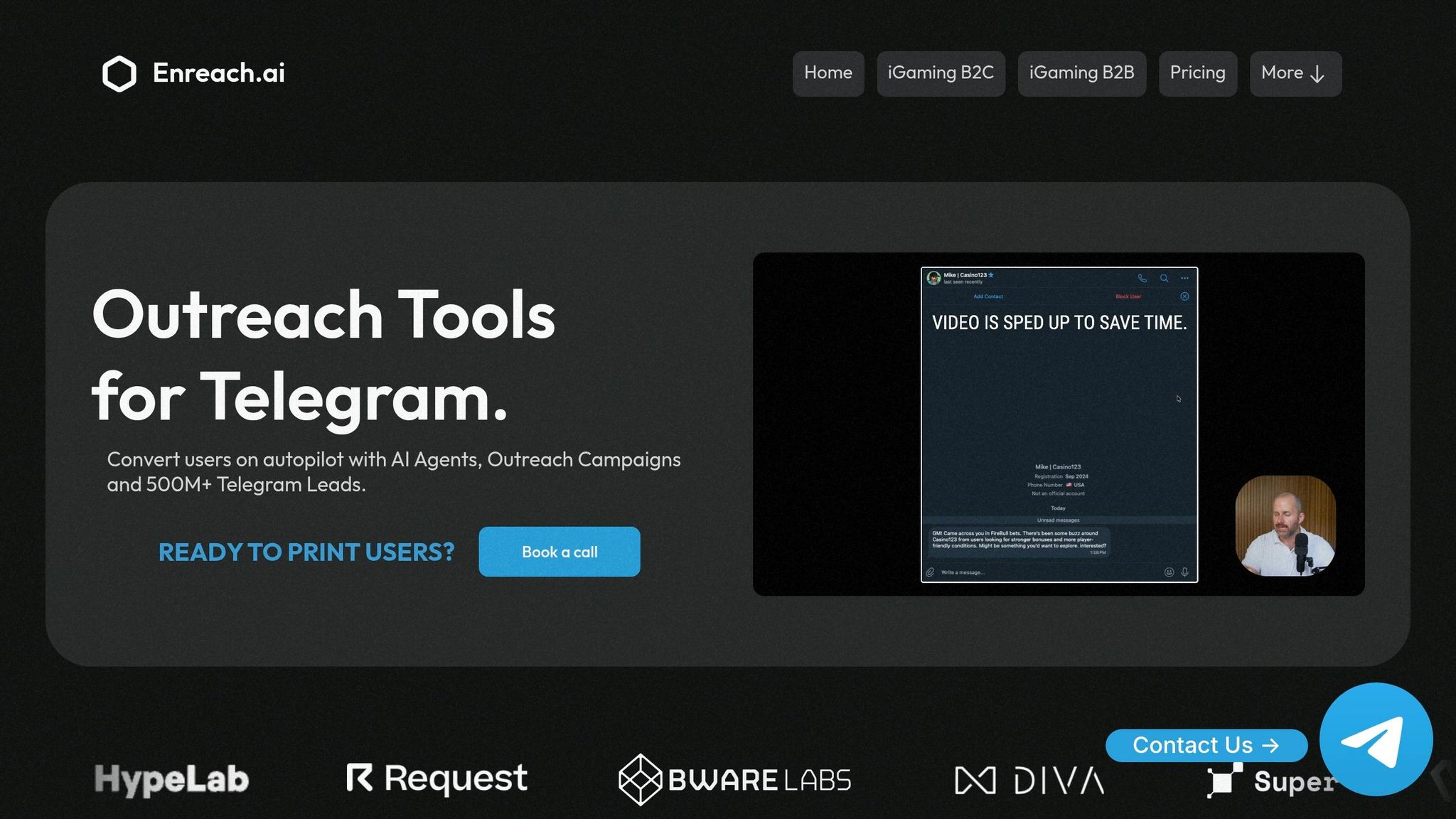
Enreach structures its FTD campaign pricing around two main components. The Outreach Tool starts at $250 per month, and the AI Agent, which includes 5,000 messages per month, costs $400. Combined, the monthly cost is $650.
When it comes to Telegram accounts, there are additional costs to consider. Each account is limited to 20 cold messages per day to comply with spam guidelines. For a campaign targeting 60,000 prospects per month, you'll need 100 accounts. Enreach offers aged, warmed-up Telegram accounts that include three months of Telegram Premium. The pricing depends on the volume you order: $65 per account for smaller orders, $35 per account for 100 or more, and $28 per account for orders exceeding 500. These are one-time purchases, not recurring fees.
This pricing model has demonstrated cost efficiency. For instance, in 2025, Lucky Bet used Enreach AI agents and achieved an average cost of $3.50 per FTD across Tier 1, 2, and 3 markets during the first year.
"$3.5 avg cost per FTD across tier 1, 2 and 3 markets in the first year." - Filipe, Lucky Bet
The setup process is designed for efficiency, leveraging proven AI capabilities. Enreach's platform includes a database of over 500 million Telegram leads, which can be filtered by factors like interest, language, location, and user activity to find ideal FTD prospects. The platform also integrates seamlessly with existing CRMs, allowing for automatic data syncing and engagement tracking. Additionally, Enreach specialists provide campaign support, enabling iGaming teams to launch campaigns 70% faster than traditional manual methods. The AI agents are fine-tuned using extensive conversation data to optimize conversions from leads to active users.
When AI Agents Are the Better Choice
AI agents shine when speed and scale are critical. If your iGaming business needs to connect with tens of thousands of prospects each month while keeping messaging consistent, AI offers a clear edge over human teams. A single AI agent can manage hundreds of conversations at once - something human teams simply can't do. They also provide instant responses, no matter the time zone. For example, if a prospect in Asia reaches out at 3:00 AM EST, the AI responds immediately, ensuring the lead stays warm and engaged during their peak moment of interest.
AI-driven campaigns are quick to deploy, making them ideal for time-sensitive opportunities. While manual outreach requires weeks of hiring and training, AI campaigns can go live in just a few days. This speed allows operators to seize opportunities tied to sporting events, seasonal trends, or competitive moments before they pass.
Cost efficiency is another key advantage. As outreach volume increases, manual efforts become more expensive, while AI costs stay relatively stable. For operators running ongoing FTD (First Time Depositor) acquisition campaigns across multiple markets, this cost structure can lead to significant savings over 12-24 months.
AI agents also excel at data integration and tracking. They automatically sync with CRMs and tag behaviors, ensuring accurate attribution from the first contact to FTD conversion. This seamless flow of data allows for better campaign optimization and directly contributes to improved performance metrics.
These benefits make AI agents a powerful tool for enhancing FTD campaigns in the iGaming space.
Campaign Results from iGaming Operators
Real-world data highlights how AI agents are reshaping FTD (first-time deposit) acquisition for iGaming operators. For instance, in 2025-2026, Lucky Bet utilized Enreach AI agents for Telegram campaigns across Tier 1, 2, and 3 markets. By combining automated messaging with lead filtering, they effectively connected with high-intent users, achieving an average cost per first-time deposit of $3.50 in the first year. Filipe from Lucky Bet confirmed this figure, which remained consistent across all market tiers, showcasing the cost efficiency of AI-driven campaigns.
Industry-wide numbers paint an even clearer picture of AI's influence. Operators leveraging AI for acquisition reported a 72% increase in FTDs alongside a 42% reduction in cost per deposit, thanks to tools like bid optimization and real-time resource allocation. This operational flexibility also had a positive impact on creative outcomes.
Speaking of creativity, AI-powered optimization improved click-through rates by 1.6X, driving higher user engagement with outreach messages. By analyzing historical data, AI fine-tuned messaging and visuals to focus on elements that led to conversions, resulting in more users progressing toward their first deposit.
The financial benefits of AI campaigns are striking. While manual outreach campaigns delivered first-year ROIs ranging from 220% to 256%, AI agent campaigns achieved staggering ROIs of 2,383% to 4,038% within the same period. Operational costs also plummeted - from $75,000–$101,000 annually for manual SDRs to just $12,000–$24,000 for AI agents. Conversion rates saw a boost as well, rising from under 5% with manual methods to 6.5% with AI agents, while the percentage of qualified leads increased from 45.5% to 64.1%.
These results underscore how AI agents not only cut costs but also enhance conversion metrics, proving their effectiveness over traditional outreach methods for FTD acquisition. The financial and operational advantages make AI agents a game-changer in iGaming outreach strategies.
Conclusion: Improving FTD Results with AI Agents
AI agents have proven to be a game-changer for first-time deposit (FTD) acquisition, outperforming traditional manual outreach methods. Campaign results clearly show that AI agents can significantly lower FTD acquisition costs, making automated outreach a highly efficient alternative.
Enreach’s platform combines AI agents with automated Telegram outreach, supported by a skilled team of sales, data, and outbound specialists who manage campaigns tailored for iGaming operators. With access to a database of over 500 million B2B contacts and insights drawn from over 30 million conversations, the platform delivers personalized messaging at scale - without the hassle of manual processes. This integration not only enhances message relevance but also ensures scalability while keeping costs in check.
By eliminating repetitive tasks, Enreach’s solution allows teams to focus on strategic growth initiatives. The platform’s ability to streamline operations and maintain consistent user acquisition makes it a valuable tool for iGaming operators looking to optimize their marketing efforts.
For operators aiming to improve FTD results, adopting AI agents isn’t just a step forward - it’s a shift toward smarter, data-driven marketing strategies that deliver measurable results. AI-driven campaigns clearly offer a competitive edge over manual outreach, setting a new standard for efficiency and success in the industry.
FAQs
When should I use a hybrid approach instead of AI-only?
A mix of AI and human input works best when there’s a need to balance efficiency with personal judgment. AI is fantastic at handling repetitive tasks and cutting costs, but it often falls short when it comes to understanding the subtleties of complex negotiations or providing tailored interactions. By blending AI-powered automation with human oversight, businesses can achieve scalability, cost savings, and top-notch user experiences. This approach is especially effective for tasks like securing first-time deposits or managing more complex customer needs in the iGaming industry.
How do I keep AI outreach compliant on Telegram?
To stay within the rules when using AI for outreach on Telegram, it's important to focus on clear user consent and follow established guidelines like the TCPA and CTIA.
Start by making sure users explicitly agree to receive messages through clear opt-in processes. Tools like Enreach can be helpful for tracking consent, archiving communications, and ensuring you're aligned with privacy laws.
When sending messages, include key elements like:
Sender identification: Make it clear who is contacting the user.
Opt-out options: Give recipients an easy way to stop receiving messages.
Timing restrictions: Respect limits on when messages can be sent.
Additionally, secure your data by using encryption and storing it safely. Keeping detailed records of all communications will further help demonstrate compliance if needed. These steps not only protect your users but also build trust in your outreach efforts.
What data does an AI agent need to personalize messages?
To craft messages that feel personal and relevant, an AI agent relies on a mix of behavioral data, transactional data, and specific signals. Alongside this, having detailed prospect or account information helps fine-tune the communication to align with the recipient's needs and interests.
Related Blog Posts
AI agents are transforming how iGaming operators secure first-time deposits (FTDs). Here's the quick takeaway:
AI agents automate repetitive tasks, handle thousands of interactions simultaneously, and deliver a 77x ROI, compared to 3.8x ROI for manual outreach. They’re cost-effective, scalable, and operate 24/7.
Manual outreach excels in personal touches, achieving higher engagement rates (e.g., 11.3% reply rate) and more revenue per campaign. However, it’s labor-intensive, costly (around $6,500/month per SDR), and hard to scale.
Key Metrics:
Cost per FTD: AI averages $30.50, while manual efforts cost significantly more.
Scalability: AI handles thousands of prospects; manual teams are limited by staffing.
ROI: AI campaigns deliver up to 4,038% ROI, versus manual outreach at 220–256% ROI.
For businesses prioritizing efficiency and scale, AI is the clear choice. Manual outreach remains valuable for high-value prospects requiring a personal touch. A hybrid approach balances AI’s efficiency with human expertise.
How AI Agents Handle Telegram Outreach
AI agents work as independent systems that analyze player data, interpret behavioral patterns, and deliver personalized messages - all without needing human input. Unlike traditional teams that operate within fixed hours, these agents function 24/7, responding in under 30 milliseconds. This constant availability ensures instant engagement across time zones, making global outreach seamless.
These agents excel in audience segmentation and messaging. They analyze player profiles to group users effectively, craft messages tailored to individual preferences, and monitor engagement metrics in real time. By leveraging natural language processing trained on over 30 million conversations, AI agents create personalized messages instead of relying on generic templates. When a player interacts, the system retrieves account details and adjusts follow-up messages based on prior exchanges, ensuring the conversation feels natural and relevant.
The ability to scale sets AI apart from manual methods. While human agents typically manage 5–10 conversations simultaneously, AI can handle hundreds or even thousands without any drop in performance. This scalability allows operators to reach tens of thousands of prospects each month. For example, iGaming operators aiming to secure first-time deposits (FTDs) can realistically target over 60,000 prospects monthly. Automation has revolutionized the industry, now managing about 85% of support interactions, with 58% of player issues fully resolved without human input.
Efficiency directly impacts FTD performance, as feedback loops continuously refine campaigns. Human specialists review results, identify gaps, and integrate insights into the AI system. This ongoing improvement sharpens campaign strategies, optimizing messaging, timing, and audience targeting. One standout example is Lucky Bet, which achieved an average cost of $3.50 per FTD across Tier 1, 2, and 3 markets in its first year using AI-powered outreach.
A hybrid approach balances AI and human expertise. While AI handles large-scale, predictable tasks like standard player outreach, more complex issues - such as VIP concerns or payment disputes - are escalated to human specialists. This model ensures that high-volume tasks benefit from automation while reserving human intervention for cases requiring emotional insight or nuanced problem-solving.
How Manual Outreach Works for First-Time Deposits
Manual outreach depends on human agents who personally craft messages, respond to player inquiries, and guide potential customers through the deposit process. This approach involves several steps, including verifying identities, reviewing documents, ensuring compliance, logging transactions, and reconciling accounts - all of which require individual attention and can take anywhere from a few minutes to several hours.
One of the standout strengths of manual outreach is its ability to deliver highly personalized interactions. Human agents are better equipped to handle objections, build trust, and foster meaningful connections. For example, in controlled tests, manual outreach achieved an 11.3% reply rate and a 7.8% positive reply rate, with meeting show rates reaching 71%, compared to 52% for AI-driven campaigns. As Muhammad, Founder of AI Agenix, pointed out:
human agents transformed objections into dialogues, whereas AI responded more literally.
However, manual outreach comes with its challenges. Scalability is a major hurdle, as the process is labor-intensive and prone to errors. Mistakes in manual processing can result in revenue losses of up to 5%. Additionally, a 59% increase in online payment fraud in Europe has forced some operators to expand their manual fraud teams by as much as 80% to keep up with the workload. This approach is particularly effective for high-value prospects but becomes less practical when cost-efficiency and scale are priorities. For instance, the monthly cost of a single sales development representative (SDR) is around $6,500, compared to just $120 for an AI agent.
Despite the higher costs, manual outreach can deliver substantial revenue. During a six-month test, human SDRs generated $147,000 in revenue, compared to $56,000 by AI agents - a 2.6x difference in absolute revenue. However, the return on investment (ROI) tells a different story: while human teams achieved a 3.8x ROI, AI systems delivered an impressive 77x ROI due to significantly lower costs. Additionally, managing manual teams requires about 5 hours of oversight per week, whereas AI systems only need around 1 hour.
Given these trade-offs, the most effective approach is to focus manual outreach efforts on high-value prospects where human judgment and a personal touch are crucial. Situations like resolving complex disputes, managing VIP players, or reviewing flagged transactions benefit greatly from human involvement. These insights highlight the strengths and limitations of manual outreach, setting the stage for a closer comparison with AI-driven methods.
Performance Metrics: AI Agents vs. Manual Outreach
When comparing AI agents with manual outreach, the differences in performance metrics stand out clearly.
Cost efficiency is where AI agents truly shine. Numbers show AI agents deliver a staggering 77x ROI, compared to just 3.8x for manual teams. This significant gap comes from AI's lower operational costs, making it a more budget-friendly option for scaling outreach efforts.
Conversion performance, however, tells a more complex story. Human SDRs (Sales Development Representatives) outperformed AI agents in absolute revenue, generating 2.6 times more revenue and achieving higher meeting show rates - 71% compared to AI's 52%. That said, AI agents have proven their worth in specific sectors like iGaming. For example, in Tier 1, 2, and 3 markets, AI agents achieved an average cost per first-time deposit (FTD) of just $3.50. Lucky Bet's Filipe shared this insight:
$3.5 avg cost per FTD across tier 1, 2 and 3 markets in the first year.
This highlights AI's ability to scale campaigns efficiently and cost-effectively.
Scalability is another area where AI agents outpace manual efforts. While human SDRs can handle around 15 prospects per month, AI agents can manage over 5,000 messages and analyze 100 prospects in the same timeframe. Scaling manual outreach requires hiring more SDRs, each costing around $6,500 per month. In contrast, AI systems can scale by simply adding $50 for every 1,000 additional emails. AI also eliminates the 12 hours per week that human SDRs typically spend on administrative tasks, offering continuous and multitasking capabilities without downtime.
AI's efficiency extends to compliance and consistency. These agents strictly adhere to Telegram messaging limits, automatically implement geo-blocking, and ensure mandatory age warnings (like "18+" notices in Brazil) are included. This level of precision reduces risks and maintains quality across campaigns.
Interestingly, a hybrid approach - where AI handles initial outreach and research while humans manage positive replies - shows impressive results. This method generated 2.5 times more revenue than human-only efforts, achieving a 9.2x ROI and a meeting show rate of 74%. By combining AI's speed and scalability with human expertise, businesses can unlock even greater potential for their FTD campaigns. This integration is a key component of B2B sales optimization for high-growth sectors.
Pros and Cons of AI Agents
AI agents offer clear benefits when it comes to reducing costs in iGaming outreach. They can process and enrich data for over 500 prospects in just seconds - work that would typically take a human growth marketer 10 to 12 hours per week. This rapid processing not only lowers operational expenses but also enables campaigns to run continuously, 24/7, without the need for human shifts. Additionally, AI agents respond to inquiries in under 30 minutes, a stark contrast to the 6 to 24 hours it usually takes for manual outreach. These advantages highlight how AI agents excel in efficiency compared to traditional methods.
Another key benefit is scalability. Manual outreach inevitably hits a point where expanding to include more prospects becomes unmanageable due to time limitations and declining quality. AI agents solve this issue by scaling through software, eliminating the need to hire additional staff to handle larger campaigns.
However, these operational perks come with notable challenges, particularly in regulatory compliance and quality control. Starting January 27, 2026, the FCC's One-to-One Consent Rule will require explicit, individual consent for AI-driven interactions. AI agents must disclose their identity as "automated systems" at the beginning of every conversation, and non-compliance can result in fines of up to $1,500 per violation under the TCPA. Major carriers like AT&T and Verizon also use AI-driven content filters to block messages that stray from pre-registered campaign templates.
Another risk lies in hallucinations, where AI agents may generate outdated or incorrect information. This can lead to consumer deception claims, damaging trust and potentially affecting FTD (First-Time Depositor) conversion rates. For operators in regulated markets, this makes it essential to implement human oversight for high-stakes interactions and maintain detailed audit trails, including timestamps and data sources, to ensure accountability.
Compliance requirements add another layer of complexity. AI agents must routinely update federal and state Do Not Call lists before initiating any interactions and adhere to quiet hours, typically between 8 p.m. and 9 a.m. in the recipient's local time zone. Using self-hosted AI models can reduce risks associated with third-party data use, which is critical since violations of data privacy laws like the CCPA can result in fines of up to $7,500 per infraction, or €20 million under GDPR. Despite these hurdles, 86% of consumers report that transparency about AI and data use fosters trust in brands. Successfully navigating these compliance challenges is essential for effectively leveraging AI agents in FTD campaigns.
Pros and Cons of Manual Outreach
Manual outreach stands out for its high level of personalization, making it possible to create offers tailored to individual users. By leveraging CRM data - such as gaming preferences, account balances, and recent wins - operators can craft messages that feel highly relevant. Adding personal touches, like referencing the specific Telegram group where the user was found (e.g., "Saw you in the Sports Betting Daily group"), makes the interaction feel authentic. This approach works particularly well in niche communities like poker, crypto-casinos, or sports betting, where users aged 18–40 with financial independence are more likely to convert into first-time deposits (FTDs).
The results speak for themselves: manual campaigns often achieve reply rates of 3–8%, outperforming the 2.1% average seen with large-scale automated blasts. When advanced personalization techniques are applied, reply rates can climb to 15–25%, and multi-layered personalization can push that even higher, to 25–40%. Another advantage of manual outreach is the ability to offer time-sensitive promotions, like a 2-hour 100% deposit match during peak gaming hours. These strategies create urgency, encouraging immediate action and driving FTDs. This hands-on, personalized approach offers a sharp contrast to the efficiency-driven methods of automation.
But manual outreach comes with significant challenges, particularly in terms of cost and scalability. The annual cost for a single Sales Development Representative (SDR) is steep - ranging from $75,000 to $100,000. This includes base pay (about $65,000), benefits and taxes ($18,000), training and onboarding ($5,000), and management overhead ($5,000). Additionally, new hires typically need 2–3 months to become fully productive.
Scaling manual outreach introduces even more hurdles. To avoid Telegram's spam filters, operators must limit cold messages to 20 per day per account, with delays of 30–60 seconds between sends. Reaching thousands of prospects requires managing 300–500 separate accounts, each of which needs a 300-day warming period to establish platform trust.
Compliance is another sticking point. Operators need to monitor geo-blocking and age-verification rules, such as Brazil’s "18+" requirement, across all accounts to safeguard their licenses. Failing to track opt-outs properly could lead to GDPR or CAN-SPAM violations, exposing teams to legal risks. Despite these obstacles, 45% of high-performing sales teams still prioritize manual outreach for initial contact with high-value prospects. While AI offers unmatched scalability, the nuanced, human touch of manual outreach remains critical for engaging specific audiences and maximizing impact in the right scenarios.
Enreach AI Agents: Pricing and Setup for FTD Campaigns
Enreach structures its FTD campaign pricing around two main components. The Outreach Tool starts at $250 per month, and the AI Agent, which includes 5,000 messages per month, costs $400. Combined, the monthly cost is $650.
When it comes to Telegram accounts, there are additional costs to consider. Each account is limited to 20 cold messages per day to comply with spam guidelines. For a campaign targeting 60,000 prospects per month, you'll need 100 accounts. Enreach offers aged, warmed-up Telegram accounts that include three months of Telegram Premium. The pricing depends on the volume you order: $65 per account for smaller orders, $35 per account for 100 or more, and $28 per account for orders exceeding 500. These are one-time purchases, not recurring fees.
This pricing model has demonstrated cost efficiency. For instance, in 2025, Lucky Bet used Enreach AI agents and achieved an average cost of $3.50 per FTD across Tier 1, 2, and 3 markets during the first year.
"$3.5 avg cost per FTD across tier 1, 2 and 3 markets in the first year." - Filipe, Lucky Bet
The setup process is designed for efficiency, leveraging proven AI capabilities. Enreach's platform includes a database of over 500 million Telegram leads, which can be filtered by factors like interest, language, location, and user activity to find ideal FTD prospects. The platform also integrates seamlessly with existing CRMs, allowing for automatic data syncing and engagement tracking. Additionally, Enreach specialists provide campaign support, enabling iGaming teams to launch campaigns 70% faster than traditional manual methods. The AI agents are fine-tuned using extensive conversation data to optimize conversions from leads to active users.
When AI Agents Are the Better Choice
AI agents shine when speed and scale are critical. If your iGaming business needs to connect with tens of thousands of prospects each month while keeping messaging consistent, AI offers a clear edge over human teams. A single AI agent can manage hundreds of conversations at once - something human teams simply can't do. They also provide instant responses, no matter the time zone. For example, if a prospect in Asia reaches out at 3:00 AM EST, the AI responds immediately, ensuring the lead stays warm and engaged during their peak moment of interest.
AI-driven campaigns are quick to deploy, making them ideal for time-sensitive opportunities. While manual outreach requires weeks of hiring and training, AI campaigns can go live in just a few days. This speed allows operators to seize opportunities tied to sporting events, seasonal trends, or competitive moments before they pass.
Cost efficiency is another key advantage. As outreach volume increases, manual efforts become more expensive, while AI costs stay relatively stable. For operators running ongoing FTD (First Time Depositor) acquisition campaigns across multiple markets, this cost structure can lead to significant savings over 12-24 months.
AI agents also excel at data integration and tracking. They automatically sync with CRMs and tag behaviors, ensuring accurate attribution from the first contact to FTD conversion. This seamless flow of data allows for better campaign optimization and directly contributes to improved performance metrics.
These benefits make AI agents a powerful tool for enhancing FTD campaigns in the iGaming space.
Campaign Results from iGaming Operators
Real-world data highlights how AI agents are reshaping FTD (first-time deposit) acquisition for iGaming operators. For instance, in 2025-2026, Lucky Bet utilized Enreach AI agents for Telegram campaigns across Tier 1, 2, and 3 markets. By combining automated messaging with lead filtering, they effectively connected with high-intent users, achieving an average cost per first-time deposit of $3.50 in the first year. Filipe from Lucky Bet confirmed this figure, which remained consistent across all market tiers, showcasing the cost efficiency of AI-driven campaigns.
Industry-wide numbers paint an even clearer picture of AI's influence. Operators leveraging AI for acquisition reported a 72% increase in FTDs alongside a 42% reduction in cost per deposit, thanks to tools like bid optimization and real-time resource allocation. This operational flexibility also had a positive impact on creative outcomes.
Speaking of creativity, AI-powered optimization improved click-through rates by 1.6X, driving higher user engagement with outreach messages. By analyzing historical data, AI fine-tuned messaging and visuals to focus on elements that led to conversions, resulting in more users progressing toward their first deposit.
The financial benefits of AI campaigns are striking. While manual outreach campaigns delivered first-year ROIs ranging from 220% to 256%, AI agent campaigns achieved staggering ROIs of 2,383% to 4,038% within the same period. Operational costs also plummeted - from $75,000–$101,000 annually for manual SDRs to just $12,000–$24,000 for AI agents. Conversion rates saw a boost as well, rising from under 5% with manual methods to 6.5% with AI agents, while the percentage of qualified leads increased from 45.5% to 64.1%.
These results underscore how AI agents not only cut costs but also enhance conversion metrics, proving their effectiveness over traditional outreach methods for FTD acquisition. The financial and operational advantages make AI agents a game-changer in iGaming outreach strategies.
Conclusion: Improving FTD Results with AI Agents
AI agents have proven to be a game-changer for first-time deposit (FTD) acquisition, outperforming traditional manual outreach methods. Campaign results clearly show that AI agents can significantly lower FTD acquisition costs, making automated outreach a highly efficient alternative.
Enreach’s platform combines AI agents with automated Telegram outreach, supported by a skilled team of sales, data, and outbound specialists who manage campaigns tailored for iGaming operators. With access to a database of over 500 million B2B contacts and insights drawn from over 30 million conversations, the platform delivers personalized messaging at scale - without the hassle of manual processes. This integration not only enhances message relevance but also ensures scalability while keeping costs in check.
By eliminating repetitive tasks, Enreach’s solution allows teams to focus on strategic growth initiatives. The platform’s ability to streamline operations and maintain consistent user acquisition makes it a valuable tool for iGaming operators looking to optimize their marketing efforts.
For operators aiming to improve FTD results, adopting AI agents isn’t just a step forward - it’s a shift toward smarter, data-driven marketing strategies that deliver measurable results. AI-driven campaigns clearly offer a competitive edge over manual outreach, setting a new standard for efficiency and success in the industry.
FAQs
When should I use a hybrid approach instead of AI-only?
A mix of AI and human input works best when there’s a need to balance efficiency with personal judgment. AI is fantastic at handling repetitive tasks and cutting costs, but it often falls short when it comes to understanding the subtleties of complex negotiations or providing tailored interactions. By blending AI-powered automation with human oversight, businesses can achieve scalability, cost savings, and top-notch user experiences. This approach is especially effective for tasks like securing first-time deposits or managing more complex customer needs in the iGaming industry.
How do I keep AI outreach compliant on Telegram?
To stay within the rules when using AI for outreach on Telegram, it's important to focus on clear user consent and follow established guidelines like the TCPA and CTIA.
Start by making sure users explicitly agree to receive messages through clear opt-in processes. Tools like Enreach can be helpful for tracking consent, archiving communications, and ensuring you're aligned with privacy laws.
When sending messages, include key elements like:
Sender identification: Make it clear who is contacting the user.
Opt-out options: Give recipients an easy way to stop receiving messages.
Timing restrictions: Respect limits on when messages can be sent.
Additionally, secure your data by using encryption and storing it safely. Keeping detailed records of all communications will further help demonstrate compliance if needed. These steps not only protect your users but also build trust in your outreach efforts.
What data does an AI agent need to personalize messages?
To craft messages that feel personal and relevant, an AI agent relies on a mix of behavioral data, transactional data, and specific signals. Alongside this, having detailed prospect or account information helps fine-tune the communication to align with the recipient's needs and interests.
Related Blog Posts

Optimize Your Sales with Enreach.
Optimize Your Sales with Enreach.
Get access to a 500M person Leads Database, Automated Outreach and AI Sales Agents.
Get access to a 500M person Leads Database, Automated Outreach and AI Sales Agents.
More Info